



For many young golfers in the UK, getting a golf scholarship and going to the United States for college golf is a huge opportunity. You get access to world class facilities, competitive tournaments, and a chance to combine education with high level sport.
But choosing the right college is not as simple as accepting the first offer you get. From speaking to players who have gone through the process, the biggest mistake is focusing on the wrong things.
This guide breaks down how to pick the right American college from someone who has been through the whole process.
My Experience
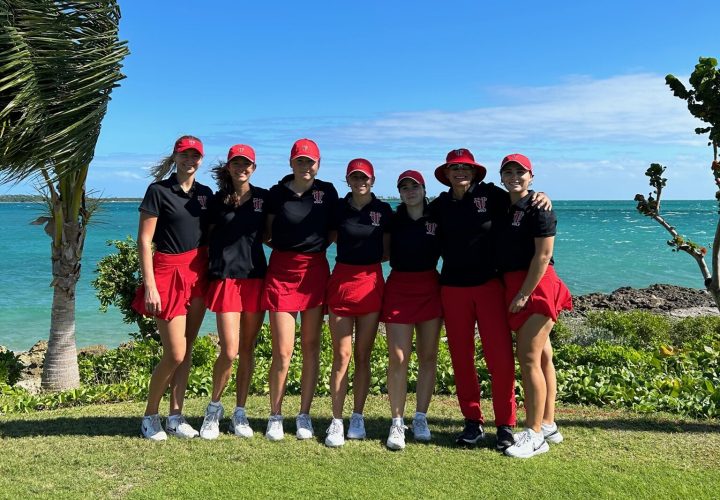
I had the opportunity of playing collegiate golf at the University of Tampa, which gave me first hand experience of what the US college system is really like. I spent all four years at UTampa, made memories that will stay with me for life and without a doubt grew as a golfer and a person. I was on the starting team all four years which meant I was able to compete regularly and play a huge amount of golf. Looking back, choosing a school in a warm state like Florida was one of the best decisions I made, as it allowed for year round practice and competition.
Looking back on my time at UTampa I enjoyed every minute of my journey, all the highs and even the lowest of lows. It taught me structure, routine, discipline, and how to manage my time effectively alongside academics. Just as importantly, it helped me learn how to work within a team environment, and develop resilience, all of which have shaped who I am today.



Understand the Different College Levels
When looking at colleges, one of the first things to get right is understanding the different divisions.
In the US college system, golf programmes are split into Division 1, Division 2, Division 3
NAIA and junior colleges.
Most UK golfers immediately aim for Division 1, but that is not always the best choice. Division 1 offers the highest level of competition and facilities, but it also comes with intense pressure and limited playing opportunities for some players.
Division 2 can often provide a better balance. You still get strong competition, but with more chances to actually play and develop.
Division 3 focuses more on academics and does not offer athletic scholarships, but the golf can still be very competitive.
Playing regularly at a slightly lower level is often better than sitting on the bench at a top programme.
Look Beyond the Golf Programme
Golf is important, but it should not be the only factor.
You need to consider:
- Location
- Weather and year round playing conditions
- Campus environment
- Academic courses available
Location is a big factor when choosing a college, some colleges are in warm states where you can play all year. Others have harsh winters which limit outdoor practice, so it is important to pick a college you will enjoy year round, even without golf. Another factor to consider about location is how far away the training facilities are from your University, are they walkable, a short uber or are the facilities 30mins+ away. Deciding if you will be having a car whilst out there will make this decision easier.
Not only is location important for golf but also your free time. You want to find a school in area that you are excited to call home for the next four years of your life. Although you have busy schedules with and academics you also have down time to explore. Tampa was such an amazing city with so much life, sports, adventure, beauty and things to do and it absolutely contributed to my experience.
Understand Golf Scholarship and Costs
Scholarships are a major part of the decision. Full scholarships can be rare, and it is more common that most players receive partial scholarships that cover a portion of tuition, accommodation, or other costs. However, this can change year on year, increasing with good performances or declining with bad academic and sporting performance.
It is important to make sure you understand what is actually covered, what you will need to pay yourself and how scholarships can change year to year, before you commit to a college. These are all great questions to ask the coach to help you understand better what it is you will be covering.
Speak to Coaches and Players
Communication is definitely key when making your decision. I recommend before committing, speak directly with the coach, and be prepared, do your research on the school, the team and have list of questions that you want to ask when speaking with the coach. After speaking with the coach and you feel you might be interested in the school it also great to ask to speak to any current players and also former players if possible. You want to find out more about the programme by asking honest questions about the training schedule, team culture, travel commitments and competition opportunities, that the coach might not always touch on.
This gives you a much clearer picture than any website or brochure.
Consider Playing Opportunities
I think this is one of the most important factors when picking a college. Some top programmes carry large squads, which means not everyone competes regularly. You need to be honest with yourself about what it is you want from your experience of being on a team.
At tournaments a team consists of five players, with the best four scores counting each round. Some schools are also able to take individuals to tournaments but it is not always guaranteed. So you might be thinking how do I get on the starting lineup? Most coaches will hold qualifying rounds for the whole team prior to the tournament, the top five players with the lowest scores over the qualifying rounds will usually be the players who make the team. However the coach always has the last say, so they may feel even if ones players scores were better than another but they don’t feel they are the right fit for the travelling five they could overrule and choose someone else. Now I can only vouch for how my coaches picked the teams and not for every team in the country so again this is a great question to ask the coach when speaking to them, to better understand how they pick the teams.
Balance Golf and Education
It is easy to focus purely on golf, but your degree matters. Injuries happen. Form drops. Plans change.
Choose a college that offers a course you are genuinely interested in and that has value beyond golf. Your education is your long term safety net, if golf isn’t your end point. And if you are undecided when you first apply to colleges, don’t worry there is still time to decide.
Education system at U.S. colleges is slightly different than in the UK. No matter what major you decide to take, you will have to complete a range of courses that are not related to your major. This can be anything from arts, languages, sciences, writing classes and more. This enables you to figure out for sure what it is you want to major in.
From my personal experience I changed my major twice from when I first applied. I started out as a Sports Management major, then switched to Accounting and then switched to Marketing.
Final Thoughts
Looking back, going to the United States to play college golf was one of the best decisions I have made, but that was largely down to choosing the right fit.
It is easy to get caught up in big names, rankings, and scholarship offers, but what really matters is finding a programme where you can play, develop, and enjoy the experience. From my own journey, the biggest gains came from competing regularly, being in the right environment, and having the opportunity to improve year after year.
Every golfer’s path will be different, but if you focus on what suits your game, your personality, and your long term goals, you will give yourself the best chance to succeed.
Take your time, ask the right questions, and make a decision based on what feels right for you, not just what looks good on paper.