


You might have seen a recent clip of one of my golf fitness training sessions, in the gym. While it may look like a fairly standard gym workout, every exercise in that session has a specific purpose for improving my performance on the golf course.
As a professional golfer, I don’t train just to get stronger, I train to move better, stay injury-free, and produce more consistent, powerful golf swings. Here’s a breakdown of that session and how each movement translates directly into better golf.
Why Golf Fitness Matters
Golf fitness isn’t just about hitting the ball further, although that’s definitely a benefit. The real value comes from building a body that can:
- Generate efficient power through the swing
- Maintain posture and control under pressure
- Stay resilient over long practice sessions and competitive rounds
- Reduce the risk of injury over time
Whether you’re a professional or a weekend golfer, improving your physical capacity can have a huge impact on your consistency and longevity in the game.
Exercise Breakdown:
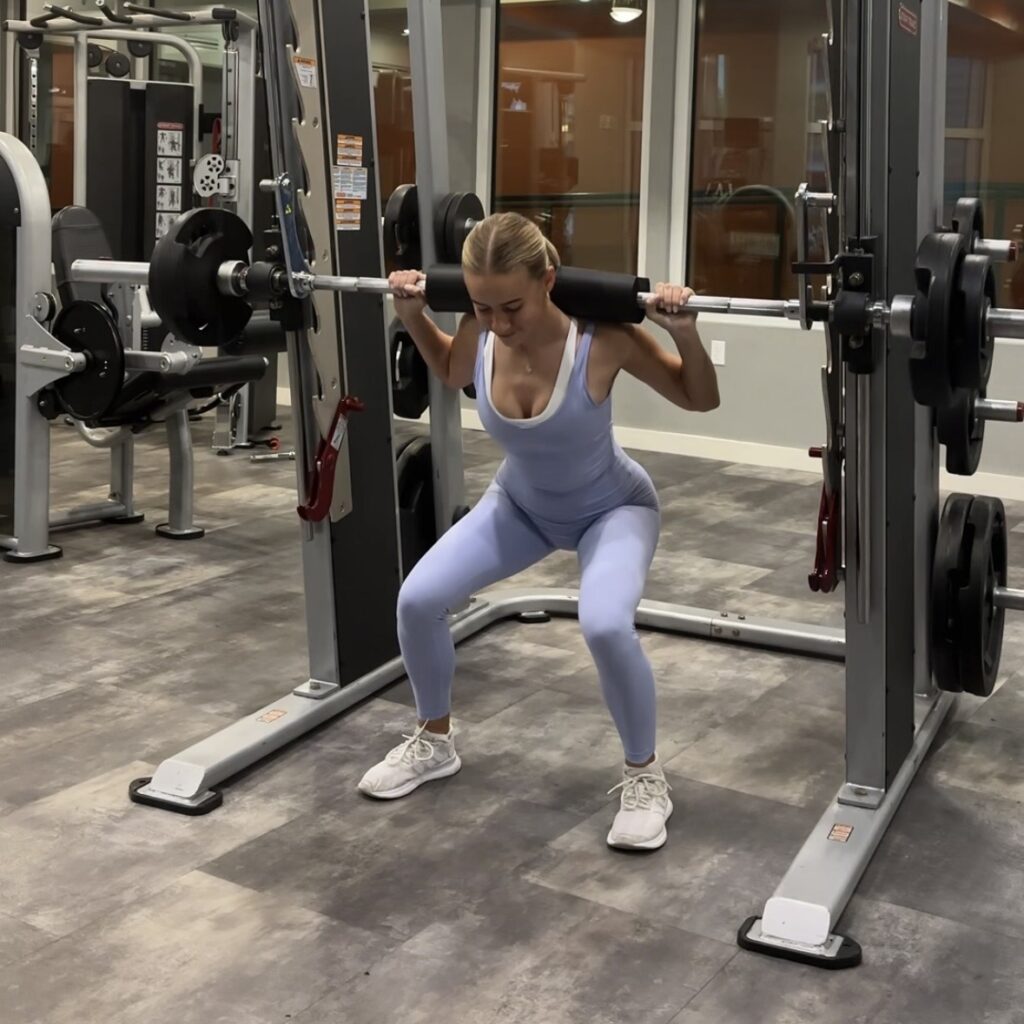
Back Squats
Primary focus: Lower body strength, power, stability
Why it’s good for golf:
- Squats strengthen the glutes, quads, and hamstrings, which are the primary drivers of force in your swing.
- They improve hip mobility and stability, allowing your pelvis to rotate efficiently.
Golf benefit:
- Distance & power: Strong legs let you push off the ground and transfer force through your core to the clubhead.
- Injury prevention: Stabilizing the lower body reduces stress on knees, hips, and lower back.
Translation to swing:
Every powerful golf swing starts from the ground up. Back squats mimic the loading of your legs in the downswing, helping you explode through the ball.
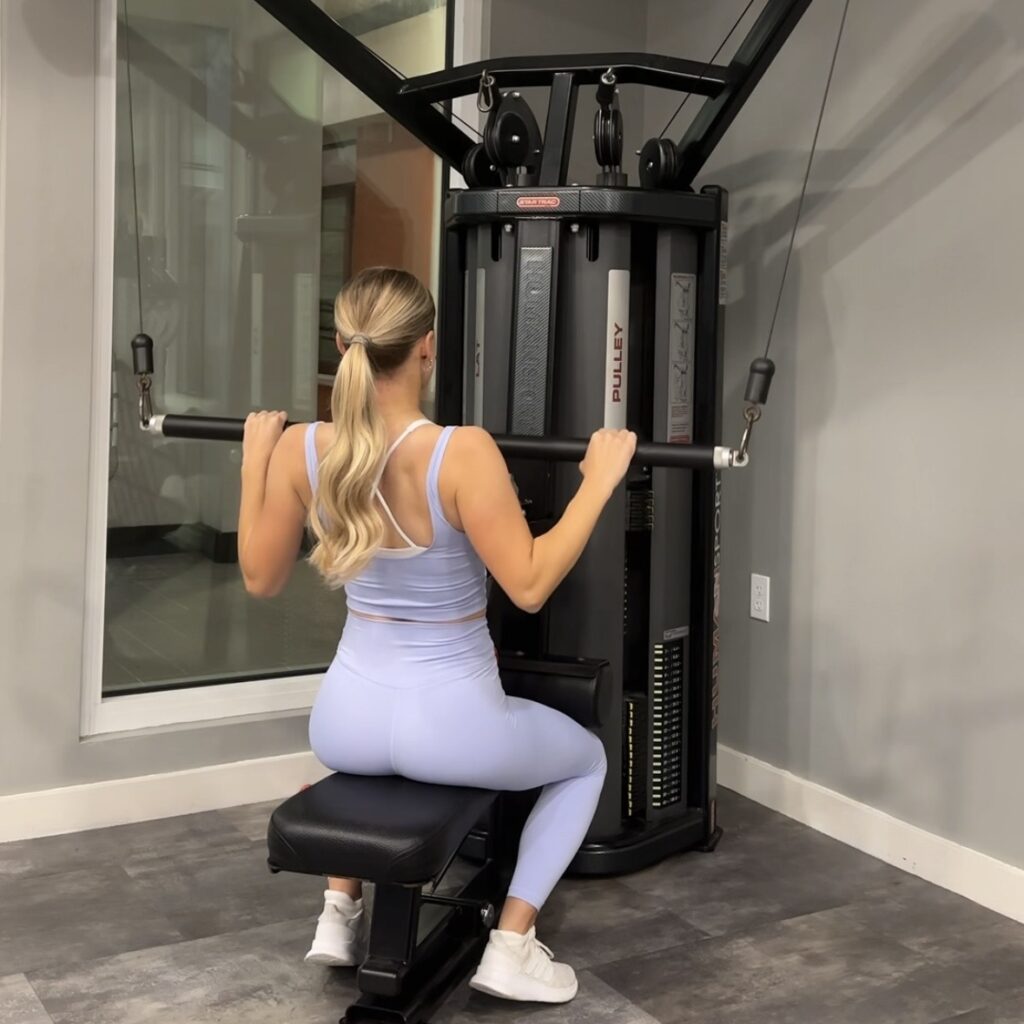
Lat Pulldown
Primary focus: Upper back and lat strength, posture, swing control
Why it’s good for golf:
- Strengthens lats and rhomboids, which control the arms and shoulders in the swing.
- Improves upper-body stability, especially in the transition from backswing to downswing.
Golf benefit:
- Consistency & control: Stronger lats help you keep your swing connected and on plane.
- Injury prevention: Reduces shoulder strain by stabilizing the scapula during rotation.
Translation to swing:
A strong back allows you to maintain posture and sequence power through the swing rather than relying only on arms.
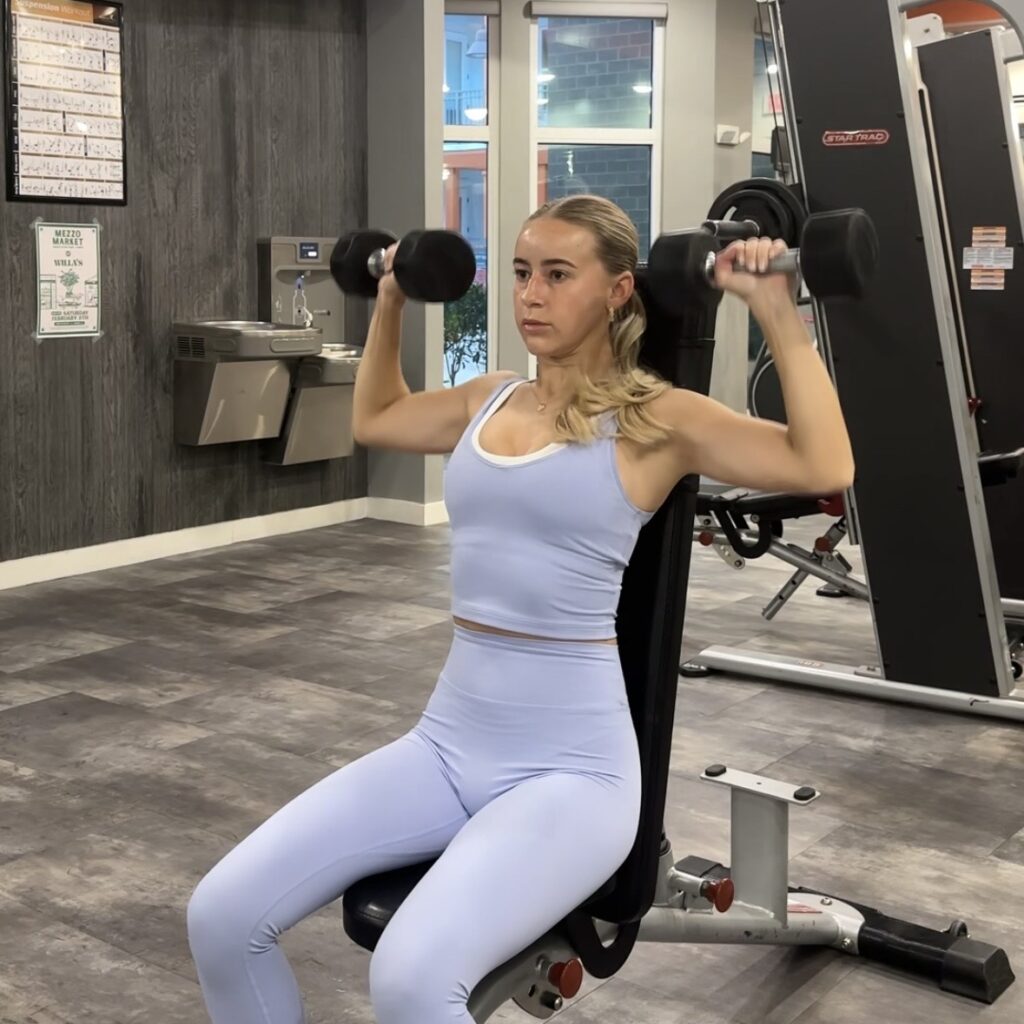
Dumbbell Shoulder Press
Primary focus: Shoulder strength, stability, coordination
Why it’s good for golf:
- Strengthens deltoids, triceps, and upper traps, supporting repetitive swings.
- Improves shoulder stability, crucial for both driving and long practice sessions.
Golf benefit:
- Power: Strong shoulders help control the club at impact.
- Injury prevention: Reduces risk of overuse injuries like rotator cuff strains.
Translation to swing:
Controlled pressing movements train the shoulders to handle force without losing range of motion, improving both swing speed and endurance.
Wide Stance Cable Chops
Primary focus: Rotational power, core stability, lower body engagement
Why it’s good for golf:
- Mimics the rotational motion of the golf swing, training the obliques, abs, and hips.
- Encourages coordination between upper and lower body, teaching the body to move as a unit.
Golf benefit:
- Distance & power: Explosive rotation builds clubhead speed.
- Consistency: Core control helps you repeat a precise swing.
Translation to swing:
Cable chops train the kinetic chain, legs, hips, core, and arms, to move in sequence, just like a full golf swing.
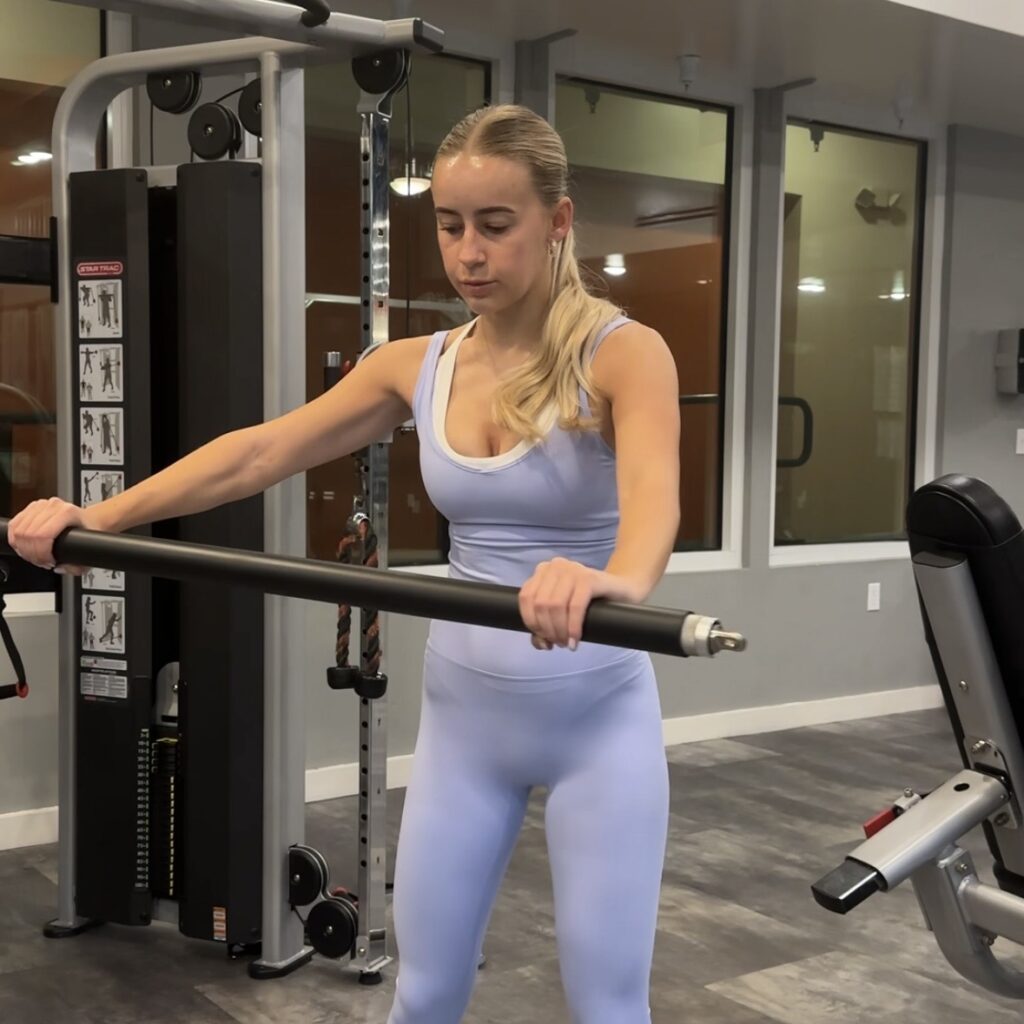
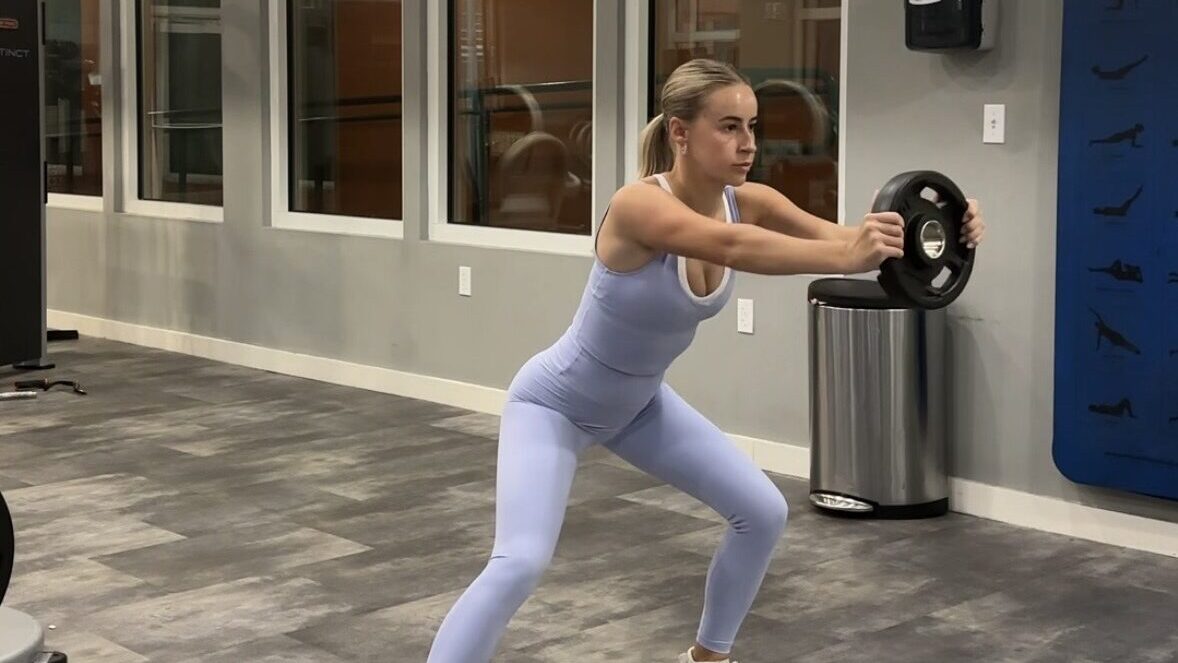
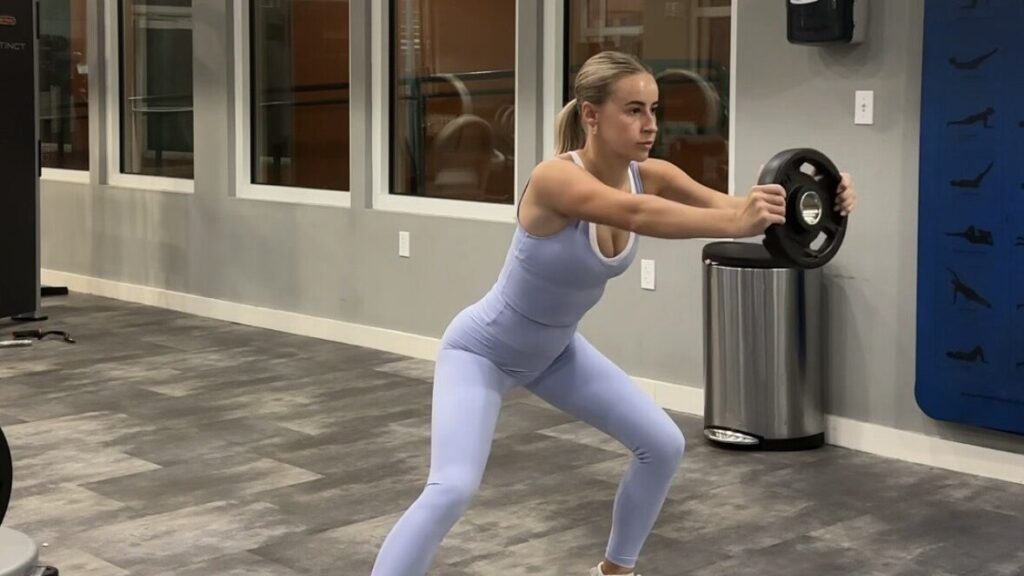
Lateral Lunge with Plate Reach
Primary focus: Lateral mobility, balance, functional stability
Why it’s good for golf:
- Strengthens adductors, glutes, and core, while improving frontal plane mobility.
- The plate reach engages the obliques and upper back, adding rotational control.
Golf benefit:
- Injury prevention: Supports knees, hips, and lower back during lateral weight shifts.
- Power & balance: Enhances the body’s ability to transfer force while maintaining posture.
Translation to swing:
Golf requires side-to-side weight transfer. Lateral lunges with rotation teach your body to shift efficiently without losing balance or stressing joints.
Common Mistakes Golfers Make in the Gym
One of the biggest things I see is golfers either avoiding the gym completely or training in a way that doesn’t transfer to their game.
Some common mistakes include:
- Focusing only on cardio or general fitness
- Training like a bodybuilder instead of an athlete
- Ignoring mobility and movement quality
- Overlooking rotational strength and control
Golf fitness should be purposeful. Every exercise should have a reason behind it.
Simple Takeaways You Can Use
If you’re looking to improve your own golf fitness, you don’t need anything overly complicated. Start with:
- Lower body strength (e.g. squats, lunges)
- Core and rotational work (e.g. cable chops)
- Upper body stability (e.g. controlled pressing and pulling movements)
Even two focused gym sessions per week can make a noticeable difference over time.
Final Thoughts
My training has evolved a lot over time, but the biggest shift has been moving from general workouts to more golf-specific training.
The goal isn’t just to get stronger, it’s to build a body that supports a more efficient, repeatable golf swing.