



How to MASTER the Fairway Bunker Shot
By Mark Sturgess, Mark Sturgess Golf Coaching
Fairway bunker shots are one of those moments on the course that can either feel routine or completely derail a good hole. When you get them right, the ball comes out clean, flies like a normal approach, and stops nicely on the green. Get them wrong and you’re either thinning it straight into the lip or digging too much sand and watching the ball crawl a few yards forward.
As a coach, I want to simplify this shot for you. With the right assessment, setup, and swing intention, fairway bunker shots become far more predictable. Here’s the exact method I teach to help you make clean contact and maximise distance from the fairway bunker shot.
1. Read the lie and the lip first
Before you even think about swinging, you need to make two quick checks.
The lip height
If the lip is high, you must have enough loft to get the ball out. If the lip is low and the green is within reach, that’s when you can be more aggressive and play the shot like a normal approach.
The lie of the ball
A clean, sitting lie allows you to treat the shot much like one from the fairway. A buried or plugged lie is a different story and usually calls for a more conservative decision.
Here’s a key decision point I see players get wrong: if the distance calls for a long iron (say 150–160 yards with a 6-iron) and the lip is high, laying up with more loft is often the smarter play. Trying to muscle a long club through sand is low percentage

2. The setup that creates clean, consistent contact
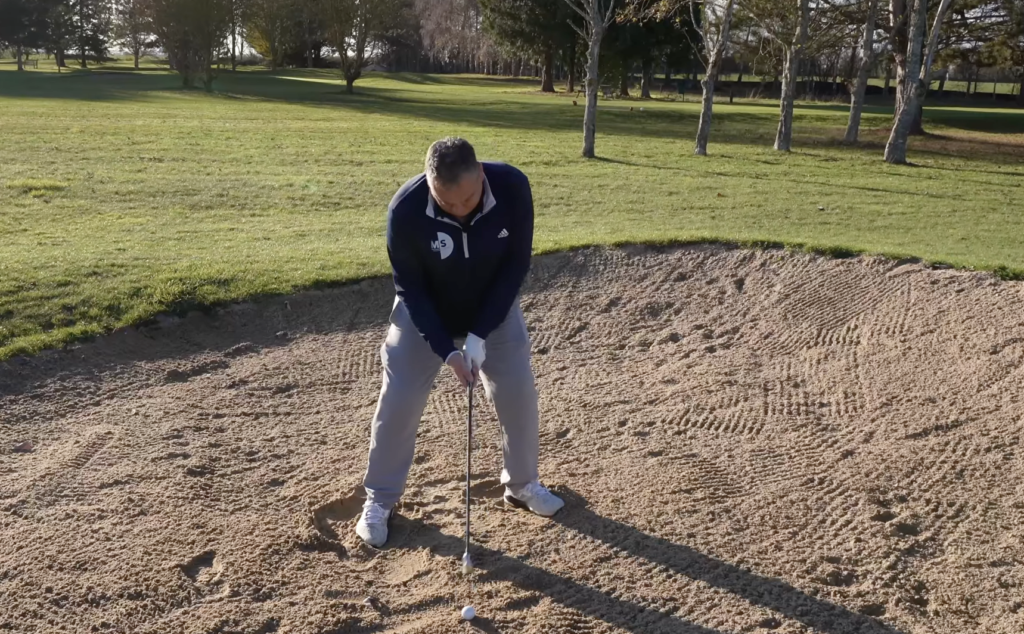
Your setup is everything in a fairway bunker. These small adjustments make sure the club strikes the ball before the sand.
Wider stance
Take a slightly wider base than normal. This gives you stability and stops unwanted movement forwards or backwards during the swing.
Grip down the club
Grip down about 1 to 1.5 inches. Shortening the club helps you control the strike and brings your hands closer to the ball, making ball-first contact easier.
Weight forward (60/40)
Set around 60% of your weight on your lead foot. This encourages a steeper, downward strike so the ball is contacted before the sand.
Ball position
Play the ball just slightly forward of centre. This helps with launch over the lip while still allowing you to hit down.
3. The swing: quiet, controlled, and down on the ball
This is not a full, aggressive swing. Think of it as a controlled three-quarter motion.
Keep the head still
Any sideways movement shifts your low point. That’s how you either hit the sand too early or catch the ball thin.
Hinge and descend
Use a compact takeaway with good wrist hinge. On the downswing, your focus is simple: hit down on the ball so it leaves the clubface before the club continues into the sand.
Commit to the follow-through
After impact, let the club travel through the sand naturally. The ball should be gone by then.
The feeling I want you to remember is: ball first, sand after.
4. Common mistakes I see all the time
Avoid these and you’ll instantly improve:
Trying to scoop the ball into the air, which usually results in a thin shot into the lip
Falling back during the swing and hitting sand first, killing all distance
Using too much club without adjusting your setup or expectations
If you have to take a long club to reach the green, ask yourself if that’s really the smartest option.
5. Quick step-by-step checklist
Use this before every fairway bunker shot:
Assess the lip and the lie — attack or lay up
Grip down 1–1.5 inches
Widen your stance and favour the lead foot (60/40)
Keep your head still and make a compact three-quarter swing
Hit down — ball first, sand after
6. Practice drills to build confidence
A little focused practice goes a long way with this shot.
Dry-run low-point drill
On grass, place an alignment stick or tee a few inches behind the ball. Make practice swings that miss the marker, training your low point to be in front of the ball.
Half-swing bunker drill
From a shallow bunker lie, hit three-quarter shots focusing on balance, head stillness, and downward strike.
Progressive distance drill
Start with shorter bunker shots and gradually increase distance while keeping the same setup and tempo.
7. When to be aggressive and when to play safe
If the lip is low and the ball is sitting clean, going for the green can absolutely be the right play. If the lip is high or the club required is long, laying up with more loft often saves you strokes over time.
Fairway bunker shots don’t have to be intimidating. Get the fundamentals right — assessment, setup, and a controlled downward strike — and they become just another shot you can trust.
If you want personalised help speeding up the learning curve, consider booking a lesson or a session focused specifically on bunker play. Put this checklist and these drills into practice, and you’ll see immediate improvements in both consistency and distance. Enjoy more coaching tips and advice here.
About Your Coach
Mark Sturgess has over 30 years experience as a PGA Professional guiding players of all abilities from beginner to elite players. He is based at Kingsway Royston near Cambridge, UK.