


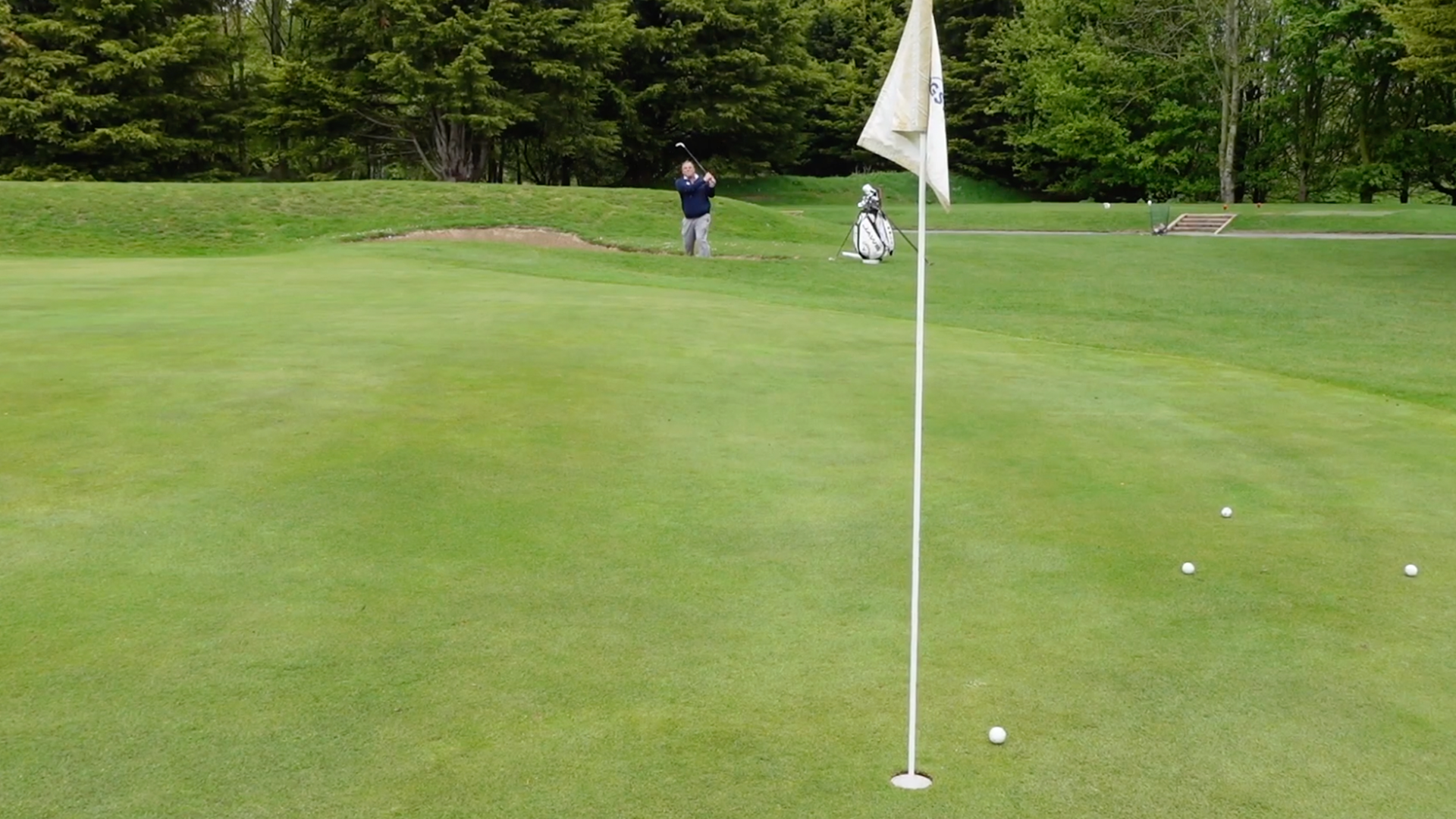
Let’s talk bunkers, those sandy traps that can turn a good round into a frustrating one if you’re not careful. The good news? Escaping them doesn’t have to be complicated. If you focus on two reliable shots; the chunk and run and the high, spinney shot – you’ll be able to save strokes around the green consistently. I’ll walk you through setup, swing, when to use each shot, and a simple practice drill to master the bunker shot.
Quick Overview: The Two Shots
Chunk and Run – A lower, running shot that plays more sand and rolls out across the green. Use a less-lofted wedge, like a 54°.
High, Spinny Shot – A higher, stopping shot that lands softly and offers potential to spin back. Use a more lofted club, such as a 58°.
Both shots are straightforward once you nail the fundamentals.
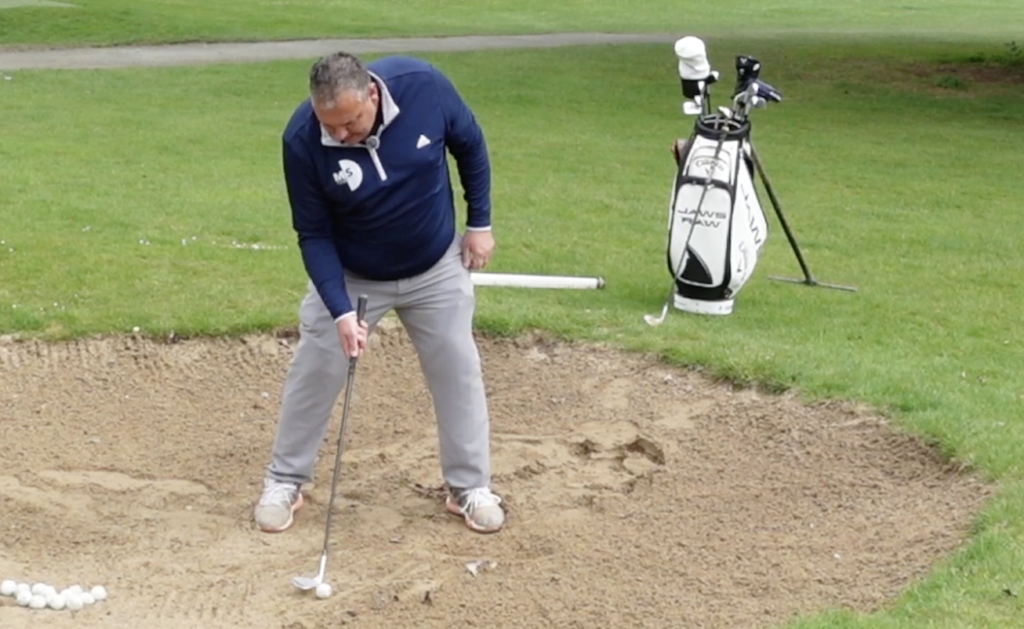
Setup and Common Fundamentals
These basics apply to both bunker shots. Get these right, and everything else becomes much easier.
Stance: Dig your feet into the sand so you feel solid and connected. Stability is key.
Ball Position: Slightly forward of centre. For the high, spinny shot, move it a touch further forward.
Weight Distribution: Slightly favour the left foot (for right-handed golfers). This ensures the club enters the sand first and shallowly brushes through.
Club Choice: Lower loft for chunk-and-run, higher loft for high-spin.
Key Feel: The goal is to strike the sand just behind the ball, using it to lift the ball while controlling energy for rolling or spinning. Differences come down to swing length, wrist hinge, release, and acceleration.
Chunk and Run: Step-by-Step
Use this shot when you have plenty of green to work with or the lie isn’t perfect. The goal: get the ball out, land softly, and let it roll toward the hole.
Club: Less-lofted wedge (54°).
Setup: Ball just forward of centre, weight slightly left, feet stable.
Swing: Short, compact swing with wrist hinge—think punchy and controlled.
Impact: Strike the sand 1–2 inches behind the ball.
Release: Keep your hands quiet on the follow-through to avoid popping the ball up.
Result: A lower trajectory that carries out of the bunker and rolls safely toward the hole. Perfect for longer run-outs and safer escapes.
High, Spinny Shot: Step-by-Step
This is your go-to for tight pins, ledges near the hole, or short greens where stopping the ball quickly is critical.
Club: Higher-lofted wedge (58°).
Setup: Ball slightly further forward than for chunk-and-run, feet stable, weight slightly left.
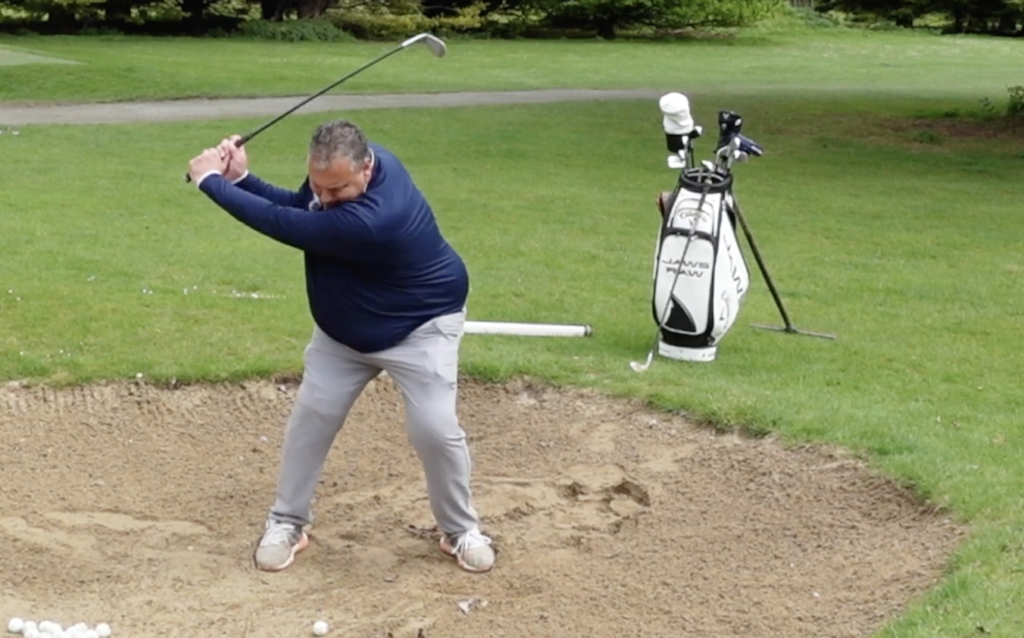
Swing: Big wrist hinge on the backswing and full release through impact. Accelerate the clubhead into the sand.
Impact: Strike just behind the ball, about an inch back.
Release: Allow your right hand to release and accelerate through the sand, generating loft and backspin.
Result: A high, soft-landing ball that checks or spins back toward the hole. Precision and stopping power at its best.
Why Acceleration Matters for Spin
Spin comes from two things: loft and speed. You can open the clubface or pick a higher-lofted wedge to add loft, but without accelerating through the shot, you won’t create enough backspin. A quick, confident strike into the sand lets the club bite and helps the ball stop on the green.
Practice Drill to Build Feel
Here’s a simple drill to lock in both shots:
Drop a tee or mark a spot about an inch or two behind a ball in the sand.
Practice short, punchy swings (chunk and run), hitting the sand behind the ball while keeping your hands quiet. Notice the lower flight and roll-out.
Switch to a more lofted wedge and practice longer swings with big wrist hinge and strong release. Feel the higher flight and how the ball stops quickly.
Alternate between the two until you can reproduce both trajectories consistently.
When to Use Each Shot
Chunk and Run: Plenty of green, longer run-out needed, or a poor lie—safe and effective.
High, Spinny: Tight pin, back ledge, or when you need the ball to stop fast near the hole.
Quick Checklist Before Every Bunker Shot
Feet dug in and stable
Ball slightly forward of centre
Weight slightly left
Choose loft based on height and spin
Decide swing length: short hinge for chunk-and-run, big hinge and full release for high, spinny
Master these two shots, focus on the subtle differences in hinge, release, and acceleration, and bunker play will become far less stressful. With a little practice, you’ll leave the sand with confidence, and maybe even a smile. For more tips, click here.
About Your Coach
Mark Sturgess has over 30 years experience as a PGA Professional guiding players of all abilities from beginner to elite players. He is based at Kingsway Royston near Cambridge, UK.