

If your iron shots are coming out fat (hitting the turf before the ball) or thin (catching the ball too early), you’re not alone. These two misses frustrate golfers at every level and they usually share the same root cause.
The single most important metric behind consistent ball striking is low point.
Understand it, train it, and you’ll see immediate gains in contact, distance control, and turf interaction.
What Is Low Point in the Golf Swing?
Picture your golf swing as a large arc.
The low point is the very bottom of that arc, the lowest place the club head reaches during the swing.
For solid iron contact, the low point must be after the golf ball, not before it.
When the club bottoms out before the ball – fat shots
When the club bottoms out too late – thin or topped shots
When the club bottoms out just after the ball – pure contact
Elite ball strikers typically bottom the club 3–4 inches (8–10 cm) after the ball with irons. Higher-handicap players can be off by several inches, which explains why strike quality feels unpredictable.
Why Low Point Matters More Than You Think
1. Contact Quality
Low point control determines whether the club strikes ball first, turf second — the gold standard for iron play.
2. Consistency
Tour-level players control low point to within half an inch. Many amateurs vary by six inches or more, leading to wildly inconsistent results.
3. Distance & Dispersion
Poor low point equals inconsistent launch, spin, and strike location. That’s why two swings that feel similar can produce completely different shots.
Common Swing Faults That Ruin Low Point
If you struggle with low point, chances are one (or more) of these is sneaking into your swing:
Casting the club – An early release moves the bottom of the arc backward.
Staying on your back foot – No forward weight shift = early ground contact.
Trying to help the ball up – The ball gets airborne because of loft, not scooping.
Fixing these doesn’t require a total swing rebuild — it starts with awareness and a simple drill.
One Simple, High-Impact Drill: The Towel Drill
This drill gives instant feedback and can be done on the range or at home (with a practice ball).
How to do it:
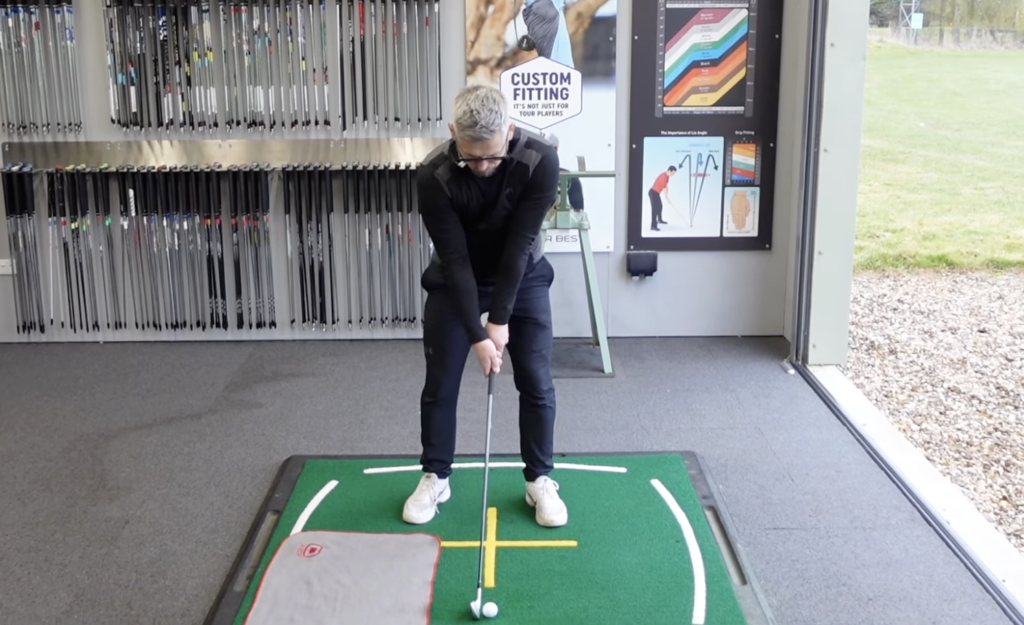
Place a towel about 5 inches (13 cm) behind the ball
Make normal iron swings
Your goal: miss the towel, strike the ball, then take turf after impact
If you hit the towel, your low point is too early.
Shift your weight slightly more forward and try again.
Why it works
Launch monitor data shows how powerful this is:
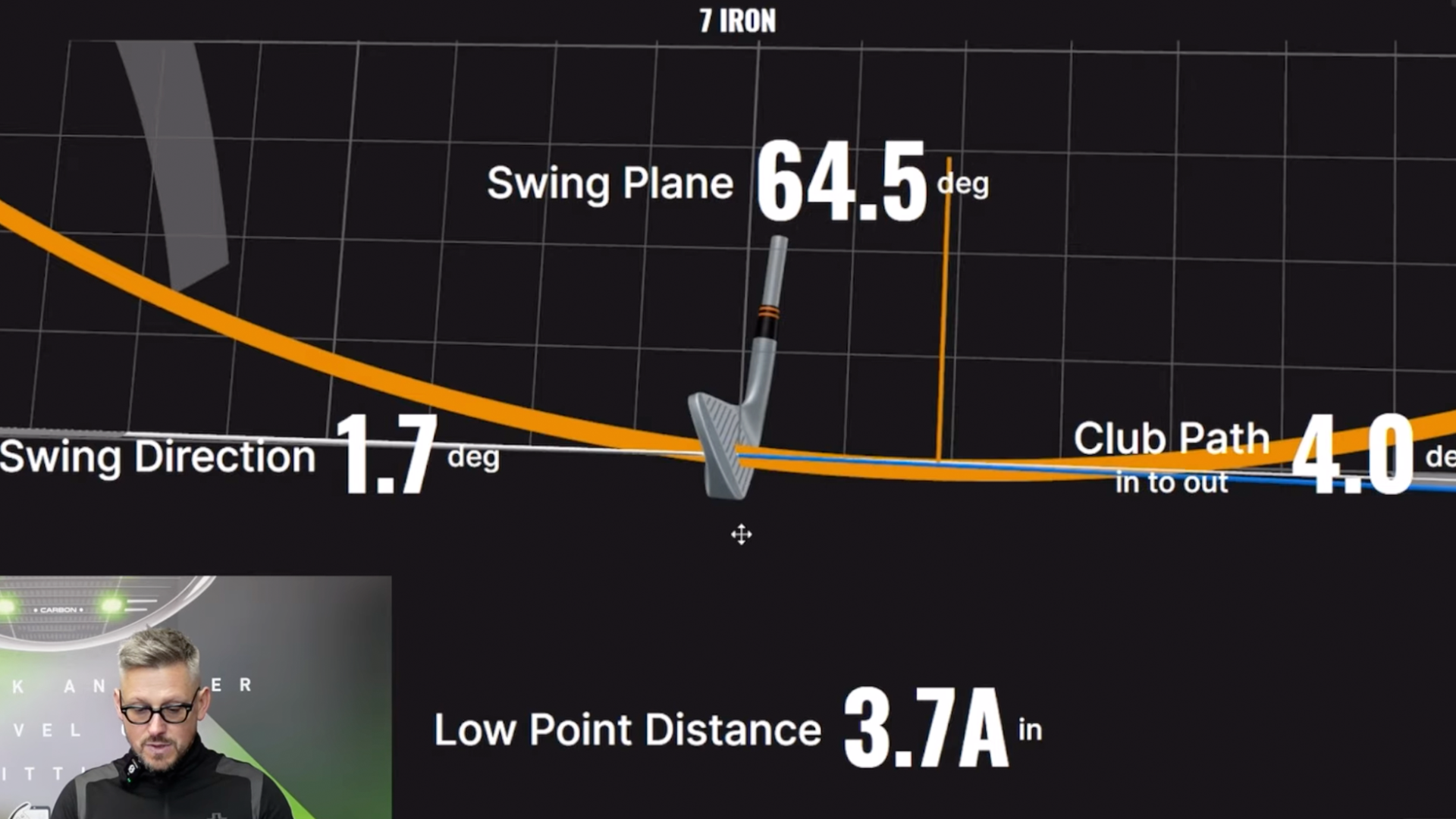
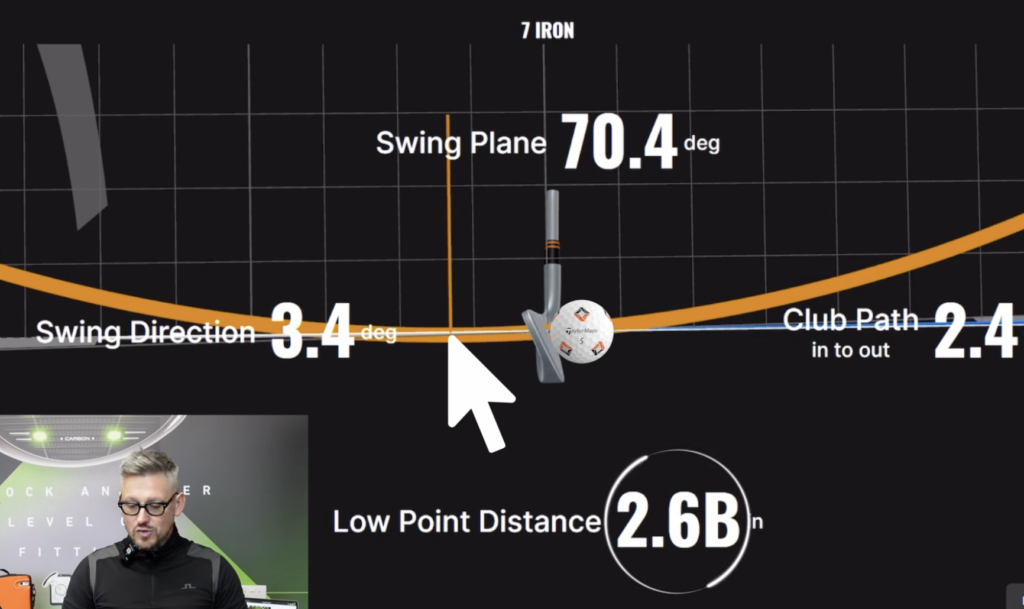
A fat strike might show a low point 2.6 inches before the ball
A corrected swing can move that to 3.7 inches after the ball
Numbers like 2.5–4.3 inches after are excellent signs — especially when turf flies forward, not back
Using Technology for Faster Improvement (Trackman Tip)
If you have access to a launch monitor, simplify your feedback.
Display low point only
Remove extra data (club speed, spin, launch)
Focus solely on where the club bottoms out each swing
Instant feedback accelerates learning. When you can see the low point shift, the feel locks in much faster.
Setup Cues That Help Control Low Point
Low point isn’t just about the swing — it starts at address.
Ball position: Just inside your lead heel for irons
Weight distribution: 55–60% on your lead side at setup
Alignment: Keep hips and shoulders stacked and aimed correctly
Even small setup errors can shift low point several inches.
Practising Low Point on the Course
You won’t always see divots clearly on grass, so create a visual reference:
Scratch a line in the turf
Or place a tee in front of the ball
Focus on striking the ground just after that marker
Feel your weight moving forward through impact and let the club bottom out naturally beyond the ball.
Quick Low Point Training Checklist
Place a towel ~5 inches behind the ball
Practise missing the towel consistently
Use launch monitors to track low point only
Set irons with ball just inside lead heel
Start with 55–60% weight on lead side
Eliminate casting and back-foot hang-back
Final Thought: Small Shifts, Big Results
Great ball striking isn’t about swinging harder or making your swing look perfect.
It’s about controlling where the club hits the ground.
Dial in your low point and you’ll unlock:
Cleaner contact
Better distance control
More confidence over every iron shot
At OuttaBounds Golf, we believe better golf starts with understanding the fundamentals that actually matter. Low point is one of them, and once you own it, your strike quality will never be the same again. Looking for more tips? Click here
About Your Coach
Dean Saunders has over 15 years experience as a PGA Professional helping serious golfers enhance their skills through his performance program. He is based at Kingsway Royston near Cambridge, UK.

