


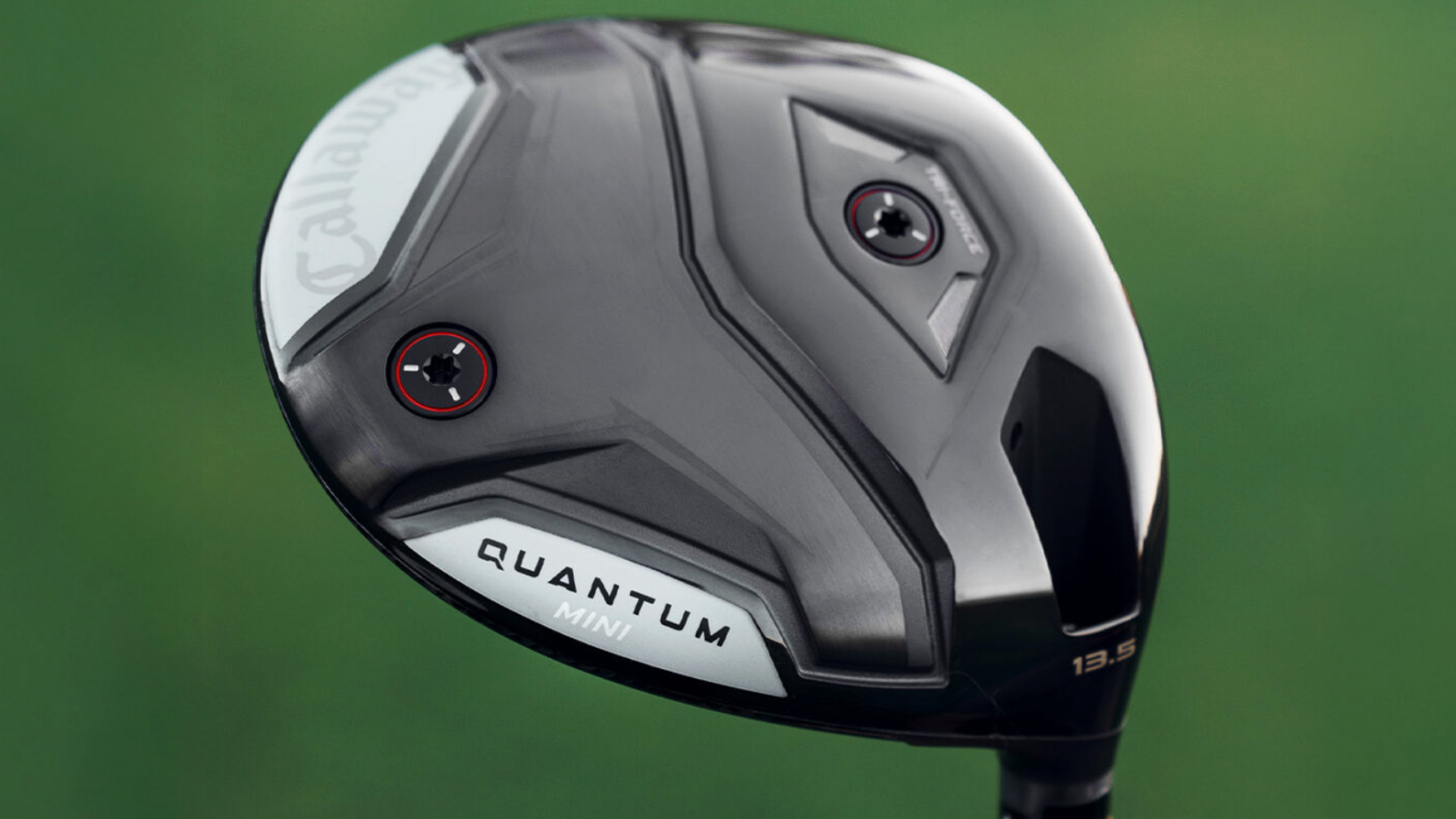
The Callaway Quantum Mini Driver blends driver distance with fairway wood control, featuring a Triforce Face, adjustable weighting, and a confidence inspiring compact head for improved tee performance.
Price: £489
Loft Options: 11.5° and 13.5°
Pros
- Excellent look and shelf appeal
Clean, modern Quantum styling with a compact head that inspires confidence behind the ball - Outstanding feel from the Triforce Face
Multi material face delivers fast ball speeds with a powerful, lively sensation at impact - Perfect gapping option
Sits neatly between driver and fairway wood, offering a true in between distance - Strong off the tee performance
Designed as a fairway finder alternative with a blend of distance and control - Adjustable weighting for flight tuning
Front and back weights allow changes to launch and spin characteristics - Versatility built in
Step Sole design improves turf interaction, giving the option to use it from the fairway
Cons
- Forgiveness may not meet expectations for all golfers
Does not always deliver the level of directional help some players want from a mini driver - Not dramatically easier than a driver
Still requires a consistent strike, especially when swing is not fully under control - Limited value versus competitors
Higher price point compared to other mini drivers makes it a considered purchase - Challenging from the fairway
Lower loft and deeper face make it harder to control off the deck for many golfers - Niche fit in the bag
Only truly valuable if it replaces a specific weakness, otherwise difficult to justify over another club - Small performance gap
Often only around ten yards difference either side, which may not warrant taking up a slot in the bag
The mini driver category has moved from curiosity to genuine option in a short space of time, and the latest entry from Callaway aims to push that forward again. The Quantum Mini Driver sits within the wider Quantum family for 2026 and is designed to bridge the gap between driver and fairway wood in a way that feels practical rather than gimmicky.
The concept sounds simple. In reality, it raises a much more important question. Who should actually use one?
This review looks at the Quantum Mini in the context of a real golf bag, not in isolation. It also combines factual product information with my own on course and launch monitor feedback to give a clearer picture of where it fits.
What a Mini Driver Is Actually Meant to Do
A mini driver is not about chasing extra distance. If anything, most golfers should expect to lose a few yards compared to a full size driver.
Instead, the goal is balance.
You get a head that looks more like a driver, which brings confidence behind the ball. At the same time, you get a shorter shaft length that feels closer to a fairway wood, which can help with control.
The result should be a club that offers:
- Strong but slightly reduced distance compared to driver
- Improved directional control
- A more confidence inspiring look than a 3 wood
For players who struggle with driver dispersion but do not want to drop down to a smaller fairway wood off the tee, this is where the mini driver earns its place.
Where the Quantum Mini Sits in the Bag
To properly understand this club, I tested it alongside the Quantum Max driver and the Quantum fairway wood.
The numbers created a very clear structure:
- Driver carry sat around 260 yards
- Fairway wood carry was around 240 yards
- Quantum Mini slotted in at roughly 250 yards
That is exactly what you want. A clean gap between each club.
From a gapping perspective, the Quantum Mini does its job perfectly. It is not overlapping awkwardly or producing inconsistent yardages. It fills a defined space.
The real question is whether that space is valuable enough to justify taking another club out of the bag.
Technology Breakdown: What Is Inside the Quantum Mini
Callaway has carried over much of the same technology seen in the Quantum driver range.
Triforce Face
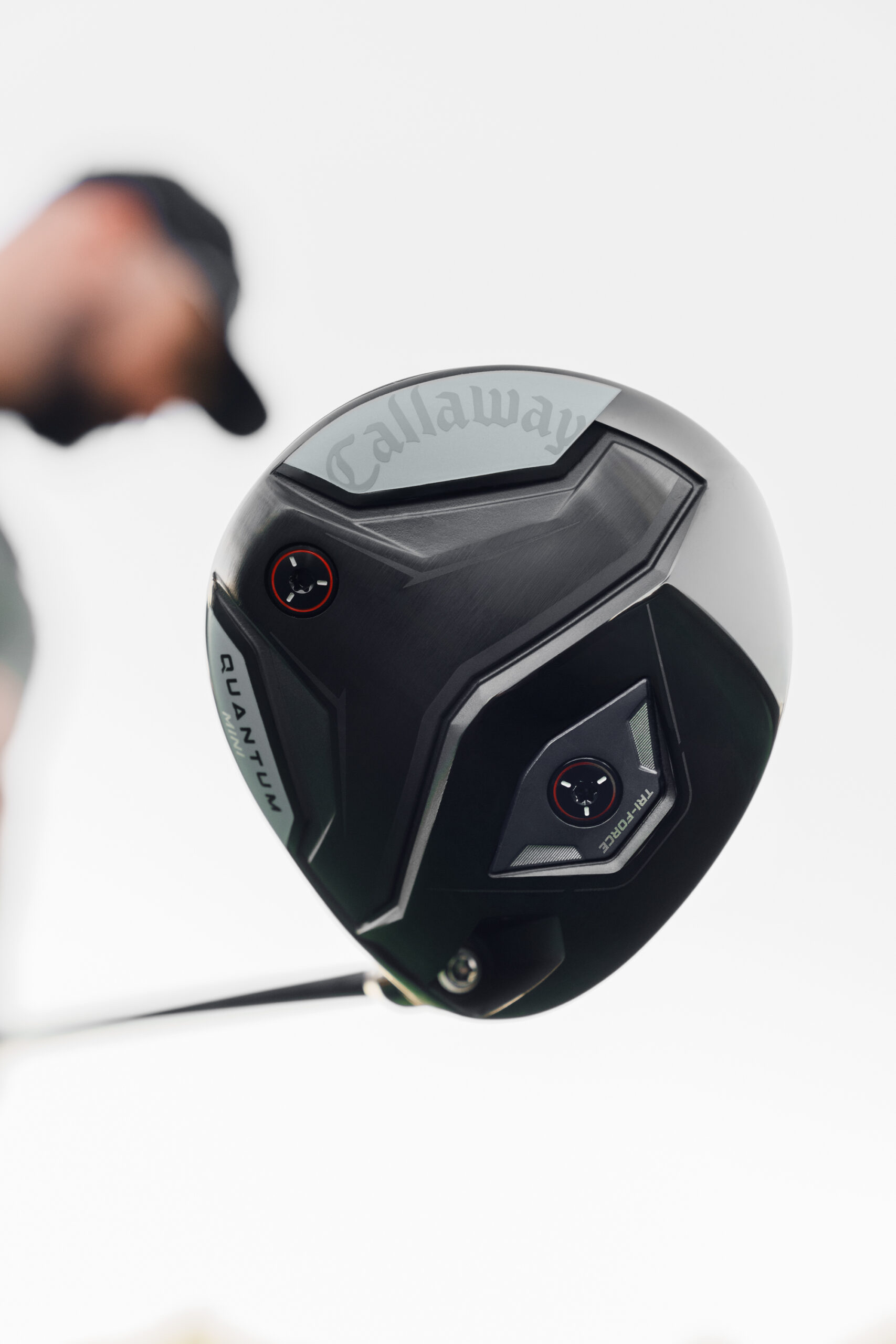
The standout feature is the Triforce Face. This combines three key materials:
- Titanium for strength and ball speed
- A poly mesh layer that helps control face flex
- Carbon elements to refine feel and energy transfer
The aim here is simple. Deliver fast ball speeds across a wider area of the face while maintaining a solid, responsive feel.
In testing, this is one of the strongest aspects of the club. Even off centre strikes retained good speed and felt powerful.
Adjustable Weighting
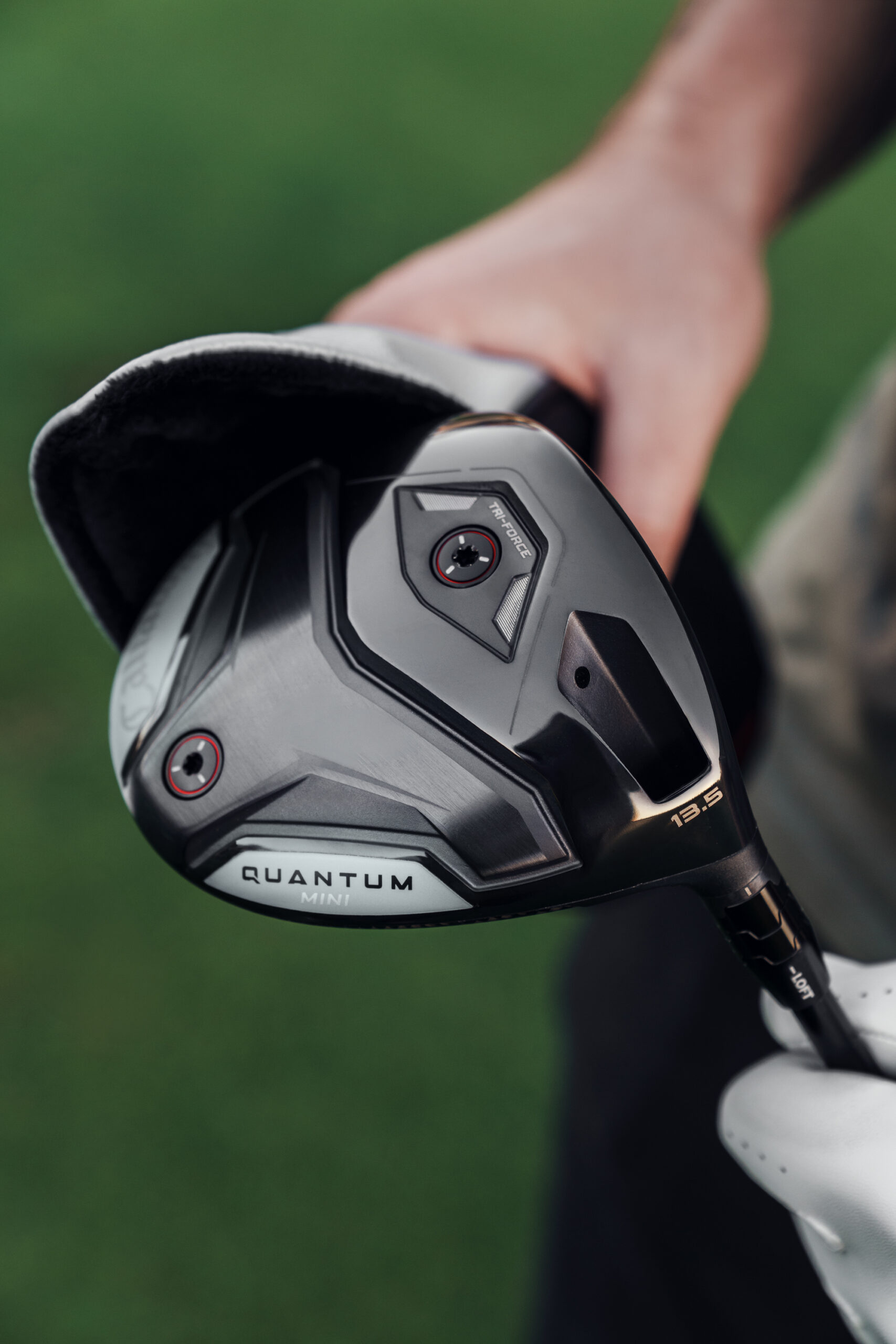
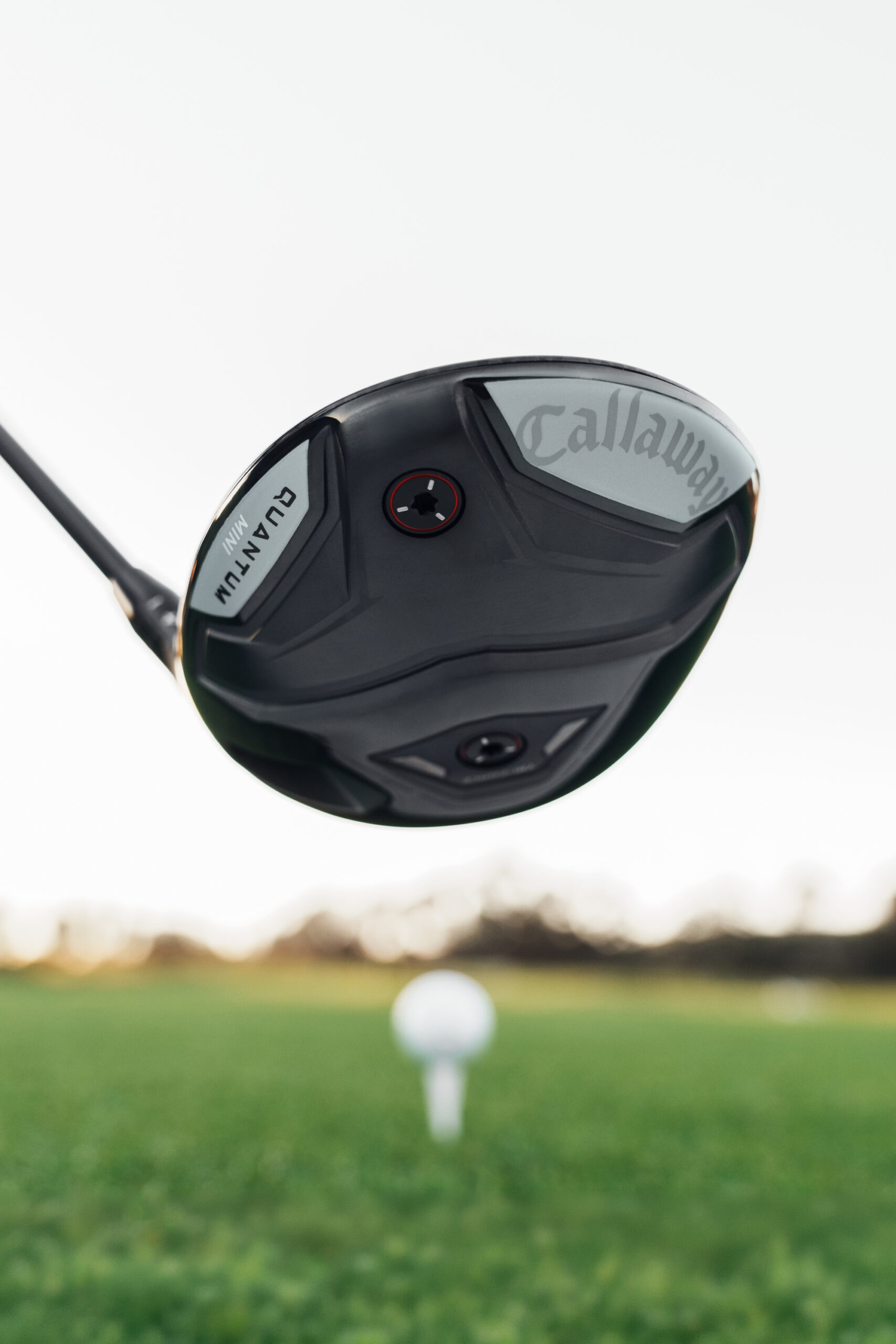
The Quantum Mini includes two interchangeable weights positioned at the front and back of the head.
This allows golfers to tweak:
- Launch characteristics
- Spin rates
- Overall ball flight
It is not an overly complex system, but it gives enough adjustability to fine tune performance depending on your swing.
Head Shape and Sole Design
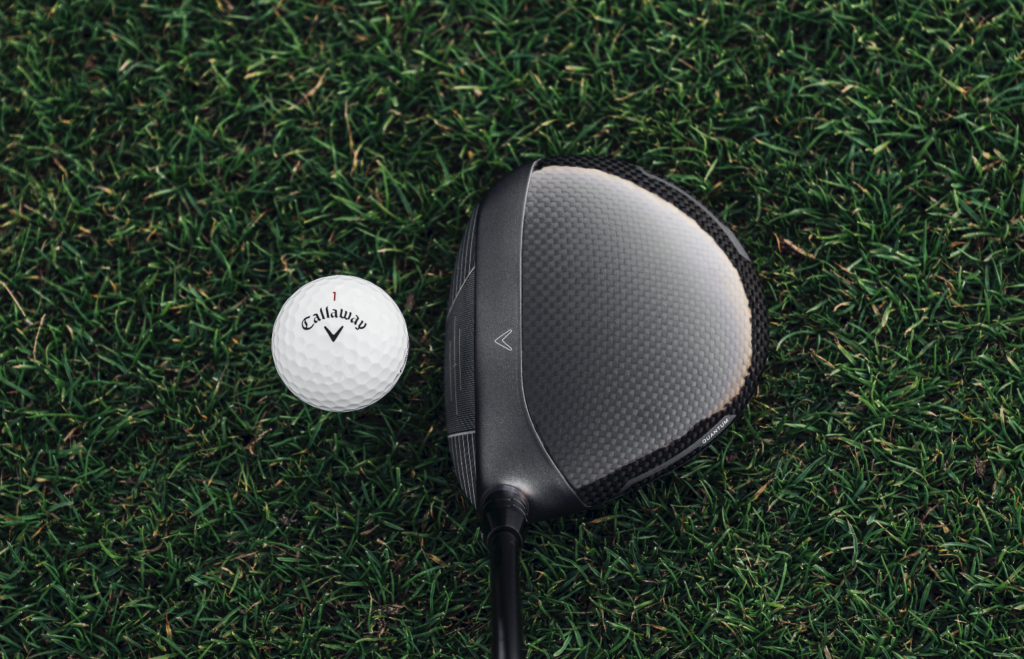
The head sits between a driver and a fairway wood in size, which is exactly what most golfers are looking for visually.
The sole has also been shaped to allow use from the turf, not just the tee. While that versatility is useful in theory, it comes with some important caveats which we will get into later.
Look and Feel – 5/5
This is where the Quantum Mini really stands out.
I personally love the Quantum family for 2026. The overall design feels modern, clean and very well put together. The mini driver fits perfectly into that identity.
Behind the ball, the smaller profile immediately appeals. It feels more manageable than a full driver but still offers far more confidence than a 3 wood.
It strikes a very smart balance.
The feel off the face is excellent. The Triforce Face delivers a powerful, lively sensation at impact that genuinely stands out. It feels fast, solid and consistent across a range of strike locations.
From both a visual and sensory point of view, this is one of the best mini drivers I have tested.
Performance – 3/5
This is where things become more personal.
It is important to stress that this feedback is based on my own swing and tendencies. It will not apply to every golfer.
In terms of raw numbers, the Quantum Mini did exactly what I expected. Distance, launch and peak height all sat neatly between my driver and fairway wood.
There were no surprises there.
However, the key reason for putting a mini driver in the bag is not just distance. It is control.
This is where I felt slightly underwhelmed.
I was hoping to see a noticeable improvement in forgiveness and directional consistency compared to my driver. While it did feel a little easier to hit, it did not deliver the level of control I was expecting.
Yes, some of that comes down to my swing. But the expectation with a mini driver is that it helps when things are not perfect. For me, it did not quite deliver that added safety.
It performed well, but not exceptionally.
Performance From the Tee vs the Turf
Off the tee, the Quantum Mini makes a lot of sense.
The shorter setup feels more controlled, and the head inspires confidence. Ball speeds remain strong, and the overall flight is very usable.
From the fairway, things get more complicated.
At 13.5 degrees of loft, this is still a relatively low lofted club. That means:
- Strike quality needs to be very precise
- It is easier to leave the face open
- Directional misses become more pronounced
I was able to produce decent distance from the deck, but control became an issue quickly. The right side of the course started to come into play more than I would like.
For stronger players, this could still be a useful option. For most golfers, it is far more effective as a tee club first and foremost.
Value: 2.5/5
This is where the Quantum Mini faces its biggest challenge.
It fits neatly into the Quantum family pricing structure, with the standard driver sitting at around 599 pounds. However, when you look at the wider market, competing mini drivers are often between 30 and over 100 pounds cheaper.
That makes this a considered purchase.
To justify the price, one of two things needs to apply:
- You are loyal to Callaway and want to stay within the Quantum family
- You have been properly fitted and this club clearly outperforms everything else
If neither of those applies, it becomes harder to make a strong value argument.
It is not that the product is poor. It is simply that the competition offers similar performance at a lower cost.
Who Should Use the Quantum Mini Driver
This is not a club for everyone.
It makes the most sense for golfers who:
- Struggle with driver dispersion
- Do not feel comfortable using a 3 wood off the tee
- Want a balance between distance and control
- Prefer a slightly smaller, more manageable head shape
For that type of player, the Quantum Mini can be a very useful addition.
Who Should Probably Avoid It
If your current driver is already performing reasonably well, the case becomes weaker.
In my own testing:
- The driver was only around ten yards longer
- The fairway wood already covered its role effectively
- The mini filled the gap, but only by a small margin
That creates a practical issue.
Golf bags have limited space. Adding a mini driver often means removing another club, usually a wedge or scoring option.
For many golfers, that trade off is not worth it.
Final Verdict
The Callaway Quantum Mini Driver is a well designed, high quality product that delivers exactly what it promises from a technical standpoint.
It looks excellent, feels even better, and produces clean, consistent gapping between driver and fairway wood.
However, it is not an automatic addition to the bag.
Its value depends entirely on your needs as a golfer. If you struggle with driver control and want something that offers a blend of confidence and manageability, it becomes a strong option.
If your current setup already works, it may simply be a very good club that does not quite justify its place.
That is the honest conclusion. It does the job it was built to do. The real question is whether that job is one your game actually requires.