


If you’re searching for a pure strike with the irons, you’re not alone. It’s one of the most common challenges golfers face, whether you’re a beginner trying to make clean contact or a seasoned player looking to tighten dispersion.
Most golfers assume the answer lies in swinging faster, adding more body rotation, or even changing their grip. While those elements can play a role, they often distract from the real key to better iron play: achieving a consistent, effective impact position.
In truth, the quality of your strike is largely determined by how you arrive at the ball, not how you start the swing. And the good news? You don’t need a complicated overhaul to improve it. With a simple, focused drill, you can train your body to deliver the club more consistently and start compressing the ball with confidence.
The Real Problem: When the Upper Body Takes Over
One of the biggest issues in amateur swings is the tendency for the upper body to dominate the motion. When your shoulders, arms, and hands take control too early, everything becomes inconsistent.
This often leads to:
- Thin strikes (catching the ball too high on the face)
- Heavy strikes (hitting the ground before the ball)
- Inconsistent ball flight and direction
- A lack of compression and distance control
Why does this happen? Because the lower body isn’t doing its job.
Your legs and hips are responsible for initiating the movement through impact. When they stall or fail to shift properly, your hands try to “save” the shot, leading to poor timing and unreliable contact.
The goal, then, is simple:
Train your body to move into a strong, repeatable impact position led by the lower body, not the hands, to create a pure strike with the irons.
What Good Impact Should Feel Like
Before jumping into the drill, it’s essential to understand what you’re trying to achieve. A solid impact position has a few key characteristics, and these should become your reference points.
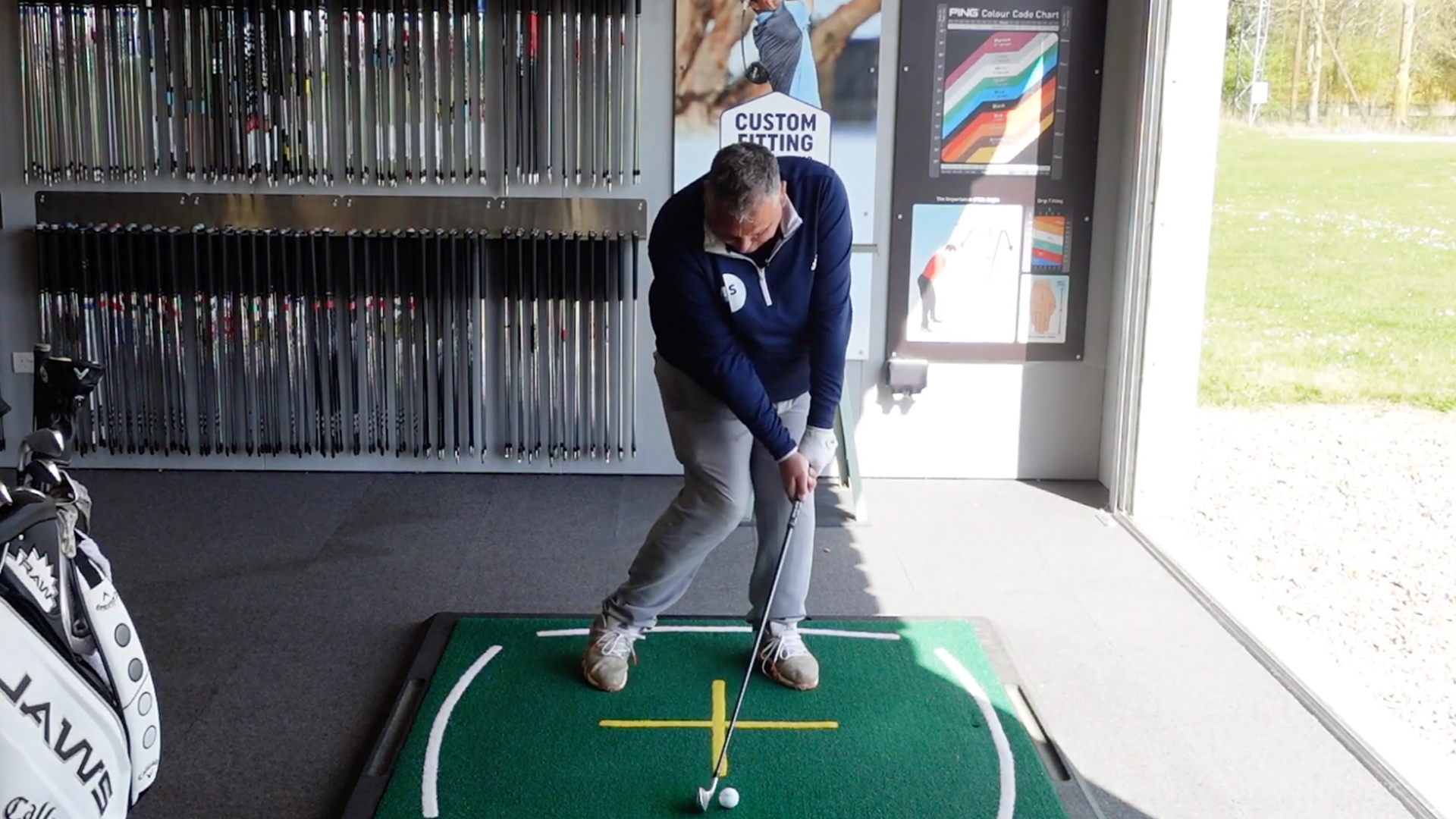
At impact, aim to feel:
- Hands slightly ahead of the ball – This promotes a downward strike and proper shaft lean.
- Right knee moving across to touch the left knee – A powerful cue for weight transfer and lower body engagement.
- Crisp compression – A sensation of striking down into the back of the ball, not scooping it.
- Head positioned over the ball – Encouraging stability, a centred strike and solid low point in the swing.
These elements work together to create a clean, ball-first strike. More importantly, they help sequence your swing correctly, lower body first, then arms and club.
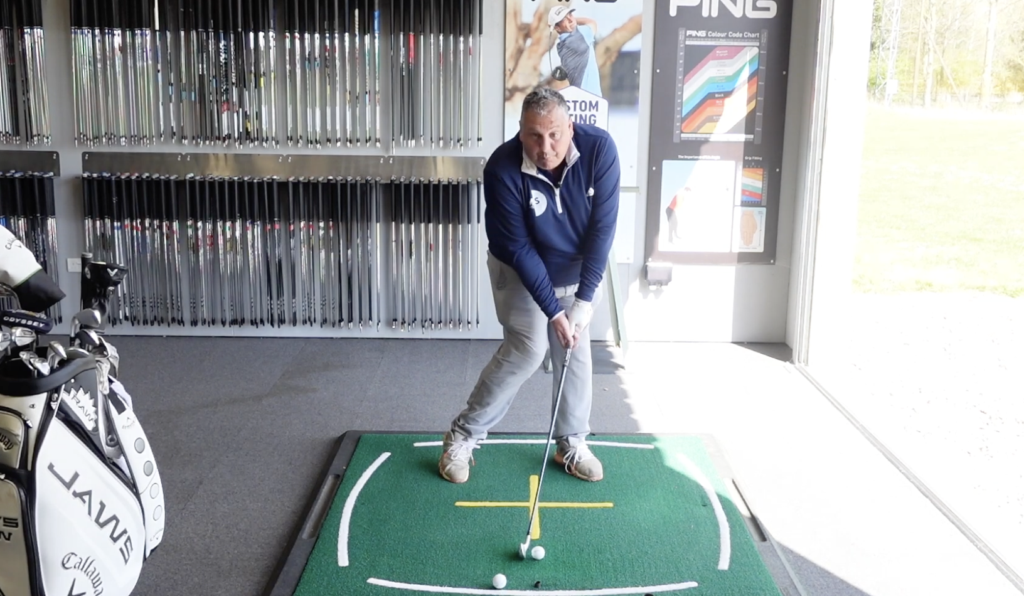
The Drill: Set Up, Then “Mimic Impact”
This drill is effective because it flips the usual approach. Instead of swinging and hoping to arrive at a good position, you start by rehearsing the correct impact, then build your swing around it.
Step-by-Step Guide
1. Take your normal setup
Address the ball as you usually would with your iron. No need to adjust your stance, grip, or posture dramatically.
2. Move into your impact position
From your setup, physically shift into the ideal impact position:
- Hands slightly ahead of the ball
- Weight favouring your lead side
- Right knee moving across toward your left knee
This is a rehearsal, feel the position, don’t rush it.
3. Lock in the feeling of compression
Imagine striking the ball from this position. Sense that downward, controlled strike into the back of the ball.
4. Rehearse the motion
Now, reset and begin blending that impact feel into a short swing. Think:
“Set up… then bang, into impact.”
5. Progress to full swings
Gradually lengthen your swing while maintaining the same sensation. Your key thought:
- “Right knee across at impact”
- Let the hands stay quiet and responsive, not dominant
Why the Right Knee Cue Is So Powerful
The “right knee across to the left knee” feeling might seem simple, but it’s incredibly effective. It acts as a physical trigger for correct sequencing.
Here’s what it does:
1. Promotes Proper Weight Transfer
When your right knee moves toward your left, your weight shifts naturally onto your lead side. This is essential for striking the ball before the ground.
2. Reduces Early Hand Release
Many golfers “throw” the clubhead early with their hands, trying to help the ball into the air. The knee movement stabilises your lower body and allows your hands to stay passive for longer.
3. Improves Coordination
It synchronises your lower and upper body. Instead of competing for control, they start working together, leading to a more efficient and repeatable swing.
In short, this one movement helps eliminate two major issues: poor weight transfer and inconsistent hand timing.
How to Practice This Drill Effectively
Like any drill, the key is not just doing it, but doing it with intention.
Use This Simple Practice Structure:
Repetitions:
Hit 8–12 balls focusing purely on impact position.
Tempo:
Keep everything smooth and controlled. This is not about power.
Feel:
Focus on:
- “Right knee across”
- “Hands slightly ahead”
Self-Check After Each Shot:
Ask yourself:
- Did that feel compressed?
- Did I strike the ball first?
- Did my lower body lead the movement?
What Your Ball Flight Is Telling You
Your results will give you immediate feedback.
- Thin or weak shots
– Likely your lower body didn’t move into the strike. Re-emphasise the knee movement. - Pulls or left misses
– Often caused by early hand release. Focus on letting the body lead and keeping the hands quieter. - Heavy contact
– Could indicate poor weight transfer or hanging back.
Use these clues to adjust your feel, not your entire swing.
Common Mistakes to Avoid
As simple as this drill is, there are a few pitfalls to watch for:
1. Forcing the hands forward
Don’t artificially push your hands ahead. Let the lower body movement create that position naturally.
2. Overusing the upper body
If your shoulders are spinning aggressively from the top, you’re back to square one. Let the legs initiate.
3. Gliding through impact
You’re not trying to sweep the ball. Focus on a crisp, downward strike.
4. Rushing the drill
This is about awareness and feel. Slow it down, especially in the early reps.
Final Thought
Better iron play doesn’t come from chasing complicated swing changes. More often, it comes from mastering a simple truth:
Consistent impact creates consistent results.
By rehearsing the correct position and training your body to move into it, led by your lower body, you’ll start to see cleaner strikes, improved ball flight, and greater confidence over your irons.
Stick with the drill:
- Set up
- Mimic impact
- Swing with the same feel
When that “right knee across” motion becomes natural, your hands will stop interfering, and your strike will become something you can rely on.
Optional Coaching Next Step
If you’d like to take this further, working with a coach such as Mark Sturgess can help you tailor this drill specifically to your swing. Small adjustments based on your tendencies can accelerate your progress and make these feels translate faster onto the course.
Start with the checklist above, commit to the process, and you’ll be well on your way to striking your irons with confidence and precision.