


Turn More, Hit It Further – Insights from PGA Master Coach Denise Hastings
Power in the golf swing doesn’t start with the arms or the shoulders. It starts from the ground up. The feet interact with the turf, the legs stabilise and drive, and the hips rotate to deliver the club with speed and control. In today’s article, PGA Master Coach, Denise Hastings shares a tip to improve power through hip rotation in the golf swing!
One of the simplest and most effective ways to unlock more power is also one of the most overlooked: adjusting your foot position so both toes are slightly turned out at address.
This small change can dramatically improve how your hips move throughout the swing. When the hips are free to rotate, golfers often experience:
-
Increased clubhead speed
-
More consistent ball striking
-
Less lateral sway
-
A more balanced finish
In this guide, based on coaching principles shared by Denise, we’ll break down exactly why hip rotation matters, how to set up for it, what it should feel like during the swing, and how to practice it on the range.
If you want to turn more and hit it further, this is one adjustment worth mastering.
Why Hip Rotation Is So Important in the Golf Swing
The hips are the engine of the golf swing.
They create the rotational force that transfers energy from the ground through the body and ultimately into the clubhead. When the hips move efficiently, they allow the rest of the swing to sequence naturally.
A proper swing sequence typically follows this order:
-
Lower body initiates
-
Hips rotate
-
Torso follows
-
Arms and club deliver through the ball
When this chain works correctly, the result is effortless power and improved timing.
However, when the hips become restricted or blocked, golfers often develop compensations such as:
-
Sliding laterally instead of rotating
-
Throwing the arms at the ball
-
Losing posture during the swing
-
Inconsistent contact
Lateral sway is particularly common among amateur golfers. Instead of turning around a stable centre, the body shifts sideways. This reduces stored rotational energy and often leads to poor contact.
The goal is simple:
Rotate around your centre, don’t slide away from it.
This is where the foot position adjustment becomes extremely valuable.
The Key Setup Change: Turn Both Toes Out
Before the club even moves, your setup can determine how freely your body rotates.
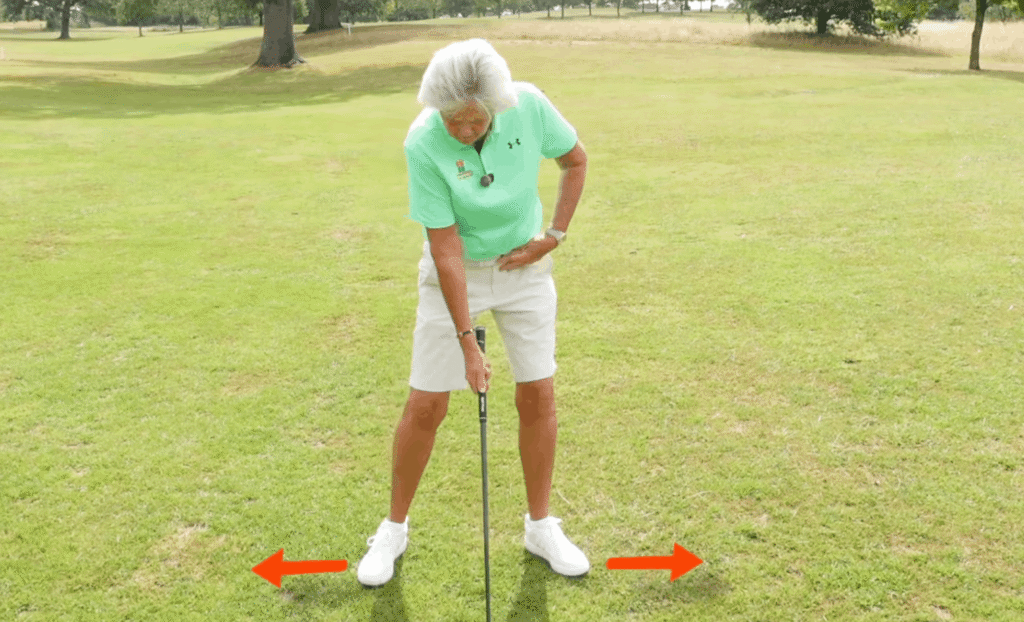
A highly effective adjustment is to turn both toes slightly outward at address.
This subtle change accomplishes two key things.
1. It Opens the Hips
Turning the toes outward allows the hips to sit in a more open, mobile position. When the hips aren’t locked square or internally restricted, the trail hip can rotate more easily during the backswing.
For many golfers, this instantly improves mobility.
2. It Reduces the Tendency to Slide
When the feet are positioned with slightly flared toes, the body naturally encourages rotation instead of lateral movement.
That means less sway and a cleaner turning motion.
Setup Checklist
When addressing the ball, focus on these fundamentals:
-
Both toes turned slightly outward
-
Weight evenly distributed between both feet
-
Athletic posture with a slight forward bend from the hips
-
Hands positioned slightly forward in a solid address position
This setup allows the upper body and lower body to work together efficiently throughout the swing.
What the Backswing Should Feel Like
With the setup in place, the next focus is how the hips move during the backswing.
Instead of shifting sideways, the key movement is rotational.
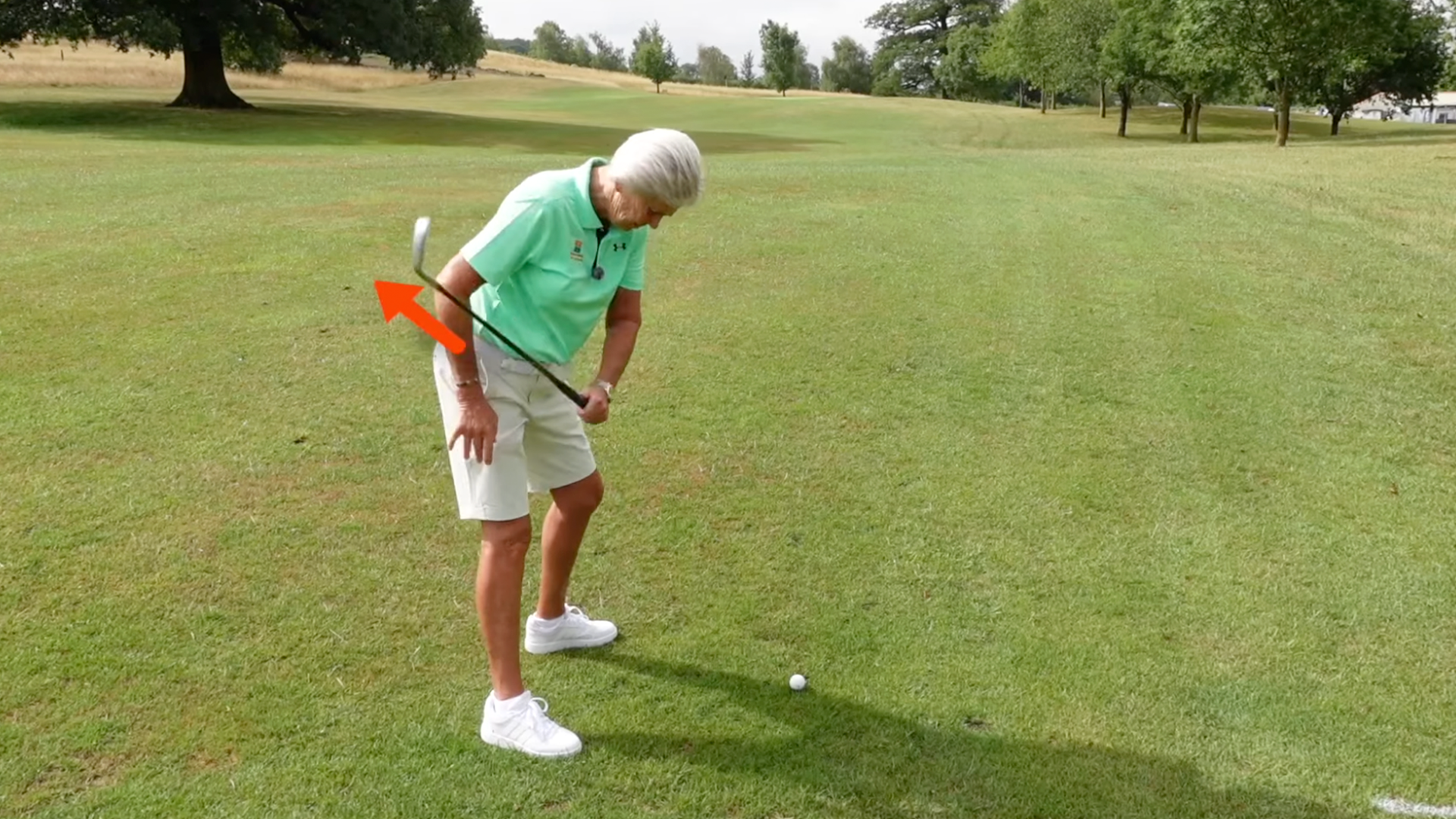
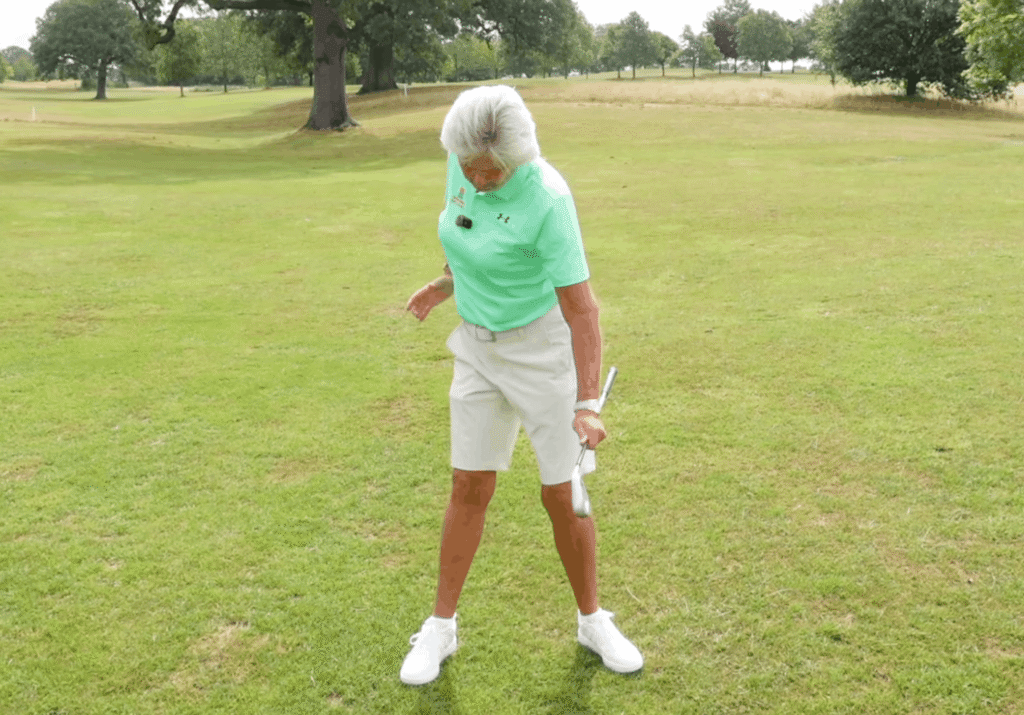
As you turn away from the target, allow your trail hip to move back and behind you.
A great physical cue is to imagine:
Your trail-side pocket moving behind you.
For right-handed golfers, this means the right pocket moves backward as the body rotates.
This movement confirms that your hips are rotating rather than sliding.
The Trail Leg Can Straighten Slightly
Many golfers try to keep the trail leg completely fixed during the backswing. In reality, allowing the trail leg to straighten slightly can be beneficial.
This subtle straightening provides:
-
More space for the hips to rotate
-
A fuller backswing turn
-
Improved club positioning at the top
You don’t need to force it. Simply allow the leg to respond naturally as the hips turn.
The result should feel like a coiling motion rather than a sway.
The Downswing and Impact: Where Power Is Delivered
Once the backswing loads rotational energy, the downswing releases it.
The transition should begin from the ground up, starting with the lower body.
One key sensation during the downswing is the lead leg becoming firmer as you approach impact.
For right-handed golfers, this means the left leg begins to straighten and stabilise as the hips rotate through the ball.
This movement signals that:
-
Weight has shifted toward the lead side
-
The hips are rotating open
-
Energy is transferring into the strike
When done correctly, this sequence produces a powerful and stable impact position.
The Finish Position: Proof of a Good Turn
Your finish position is often the best indicator of what happened earlier in the swing.
A proper rotational swing should end with:
-
Hips fully rotated toward the target
-
Chest facing the target
-
Weight mostly on the lead foot
-
A balanced, stable finish
If you can hold your finish for several seconds without losing balance, it’s a good sign that your swing was rotational rather than lateral.
Balance is the visual confirmation that everything worked correctly.
The Simple Swing Sequence to Remember
If you want to simplify the process, focus on four key checkpoints.
1. Setup
-
Toes slightly turned out
-
Weight evenly balanced
-
Athletic posture with hands slightly forward
2. Backswing
-
Rotate the trail hip behind you
-
Feel the trail pocket move back
-
Allow the trail leg to straighten slightly
3. Downswing / Impact
-
Shift weight toward the lead side
-
Lead leg firms up through impact
-
Hips rotate toward the target
4. Finish
-
Balanced finish
-
Hips and chest facing the target
-
Weight on the lead side
These simple checkpoints help keep the swing connected, powerful, and repeatable.
A Simple Range Drill to Improve Hip Rotation
To build this movement pattern, try this easy drill during your next practice session.
Step 1: Set Up Correctly
Address the ball with both toes turned slightly outward and your weight evenly balanced.
Focus on maintaining a relaxed but athletic posture.
Step 2: Make Slow Half Swings
Start with half swings and focus purely on hip movement.
Your goal is to feel the trail hip rotating backward, not sliding sideways.
Step 3: Notice the Trail Leg
As you reach the top of the backswing, allow the trail leg to straighten slightly.
This should feel natural rather than forced.
Step 4: Rotate Through Impact
On the downswing, feel the lead leg stabilising while your hips rotate toward the target.
Finish in a balanced position.
Step 5: Repeat with Tempo
Repeat this drill 20–30 times at slow speed.
Once the movement feels natural, gradually increase swing speed while maintaining the same sequence.
Practicing slowly first helps your body learn the correct movement pattern.
Common Hip Rotation Mistakes (And How to Fix Them)
Even with good intentions, golfers often make a few common mistakes when trying to rotate better.
Mistake 1: Lateral Sway
Sliding away from the target in the backswing reduces rotational energy.
Fix: Focus on feeling the trail hip move backward rather than sideways.
Mistake 2: Over-Rotating the Upper Body
Some golfers rotate the shoulders excessively without engaging the lower body.
Fix: Maintain solid posture and keep the hands positioned properly at address so the hips lead the motion.
Mistake 3: Rushing the Downswing
Trying to swing harder often causes the sequence to break down.
Fix: Remember the correct order:
Hips → torso → arms → club
Let the swing build speed naturally.
Why This Simple Adjustment Works
Golf instruction often becomes overly complex, but sometimes the biggest improvements come from small, smart adjustments.
Turning your toes outward:
-
Improves hip rotation
-
Encourages rotational movement
-
Reduces lateral sway
-
Allows a fuller turn
-
Helps create a powerful downswing sequence
For many golfers, this small setup change immediately improves how the body moves.
And when the body moves better, the ball tends to travel farther and straighter.
Final Thoughts
Better hip rotation can transform your golf swing.
By simply turning your toes slightly outward at address, you create the space your hips need to rotate properly throughout the swing.
Combine that with:
-
A balanced setup
-
A trail hip that moves back in the backswing
-
A firm lead leg at impact
-
A fully rotated, balanced finish
…and you’ll start building a more powerful, efficient swing.
Like any swing improvement, the key is repetition with awareness. Practice the movement slowly, use the drill regularly, and gradually build speed as the motion becomes natural.
The reward?
More rotation, more power, better strikes and longer drives.
About Your Coach
Denise Hastings is an honorary member of the PGA and a master coach. She was a founder member of the Ladies European Tour, offering an incredible wealth of experience to her students. Check out more tips and drills here